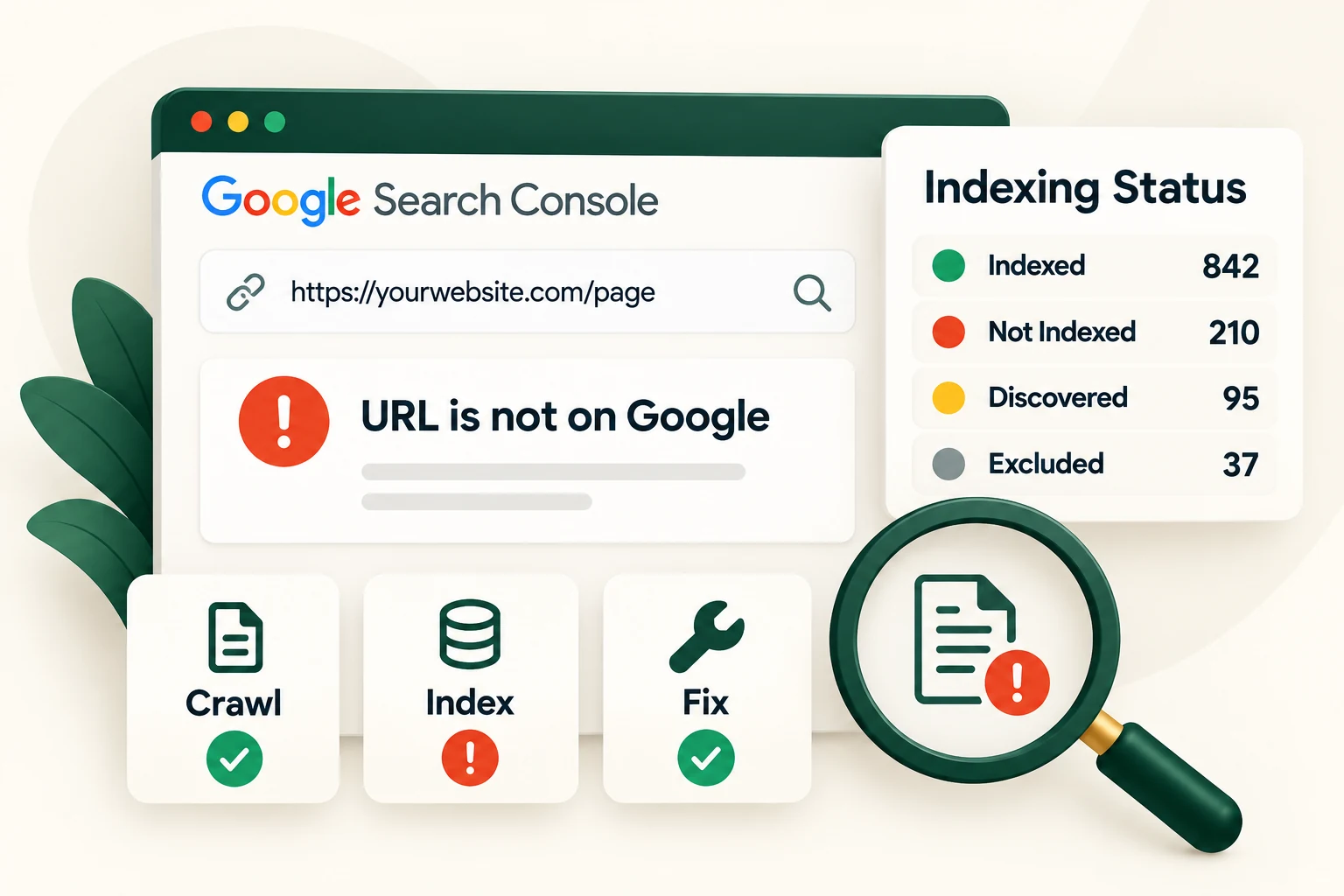
Website Migration SEO Checklist
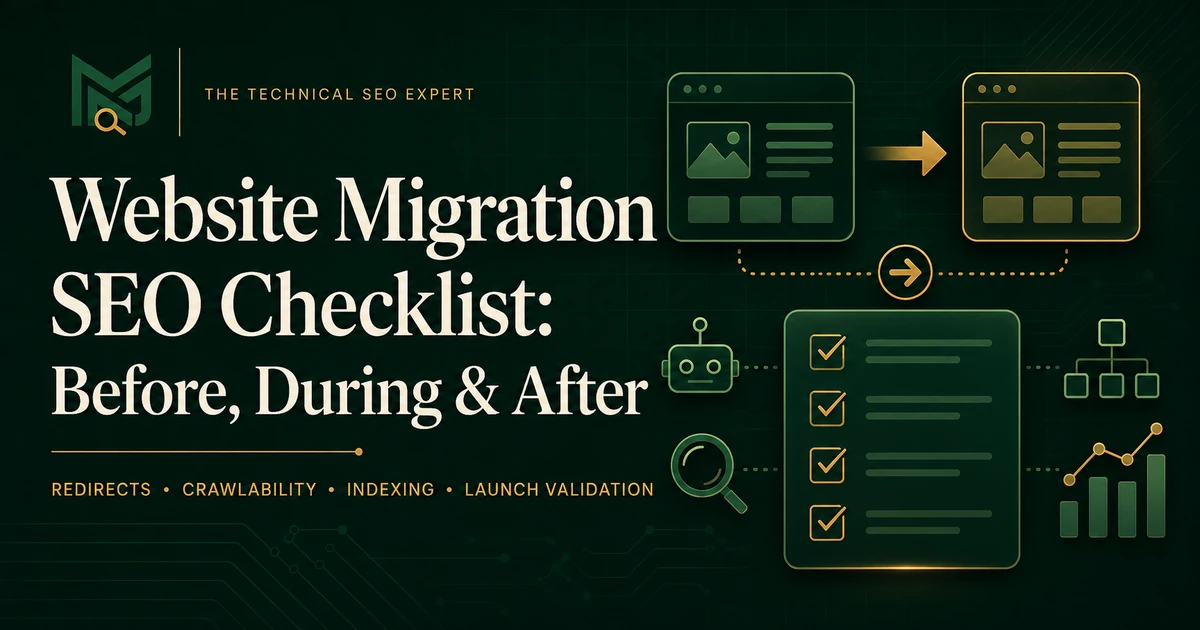
Use this website migration SEO checklist to protect redirects, crawlability, indexing, tracking, and organic performance before, during, and after launch.
Use the migration checklist →SEO should be involved before launch—not after missing URLs and traffic drops appear. I can review the migration plan, map technical risks, create redirect requirements, and validate the new site before and after launch.
Discuss Your Website Migration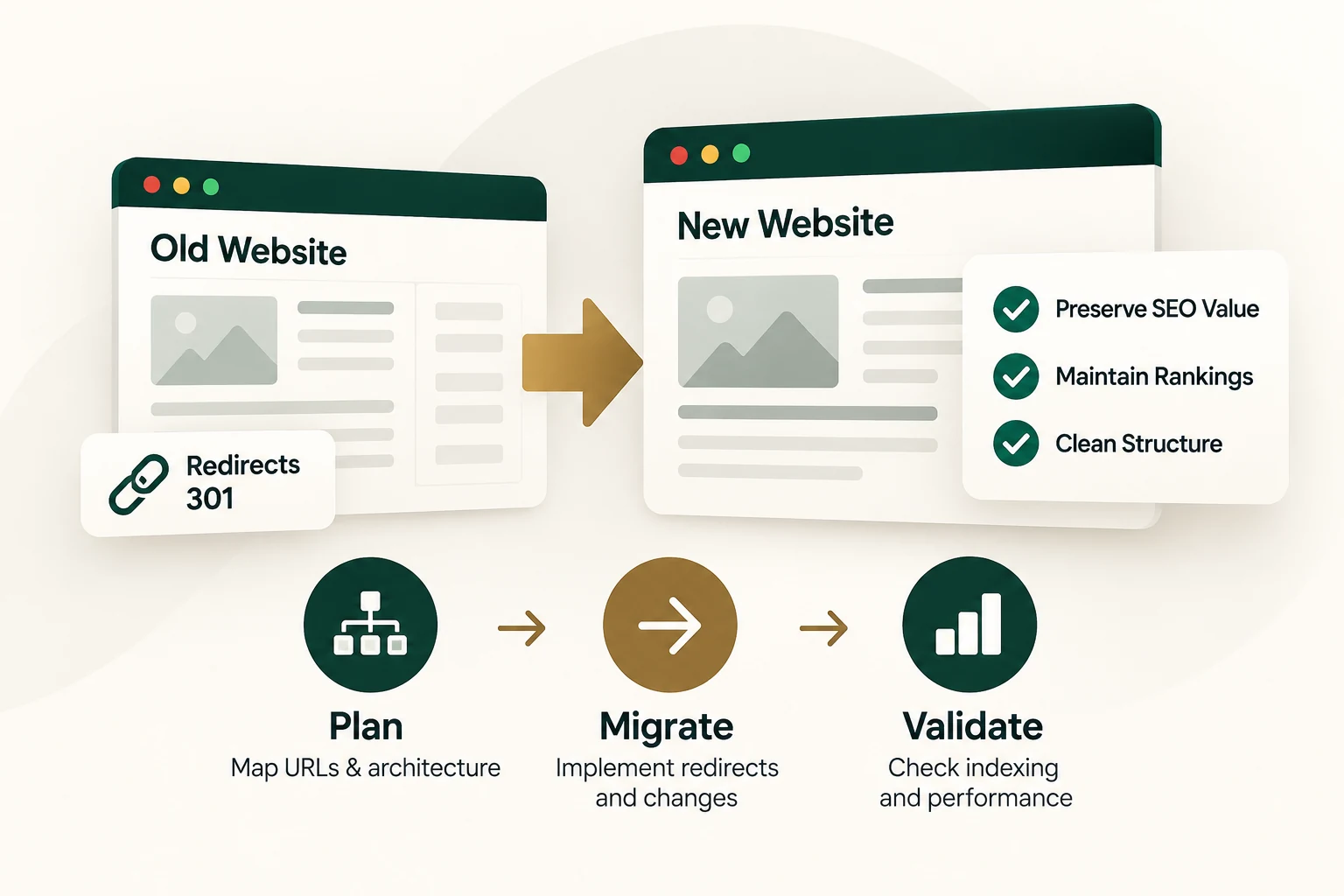
Website migrations change the technical signals search engines rely on. I help plan URL changes, redirects, canonicals, staging controls, internal links, sitemaps, launch checks, and post-migration validation so the move is structured, testable, and easier to troubleshoot if visibility changes.
Any change that affects public URLs, templates, navigation, rendering, indexability, or site ownership can create organic-search risk. Common migration types include:
Not every hosting change requires the same SEO work as a URL-changing migration. The first step is to identify which public signals will actually change and plan controls around those changes.
Before the move, create a baseline of the existing website. This provides both a planning inventory and a comparison point after launch.
A focused pre-migration Technical SEO audit can establish the technical baseline when the existing site is complex or poorly documented.
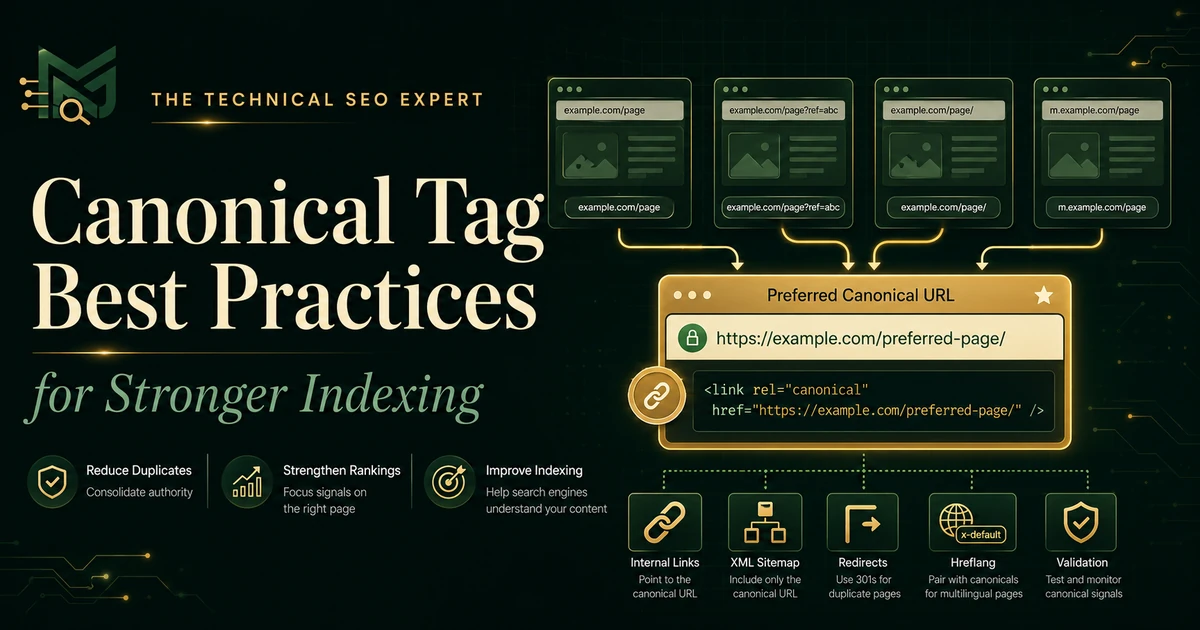
When URLs change, each important old URL should be mapped to the most relevant new destination. The goal is to preserve user intent and consolidate signals—not simply send everything to the homepage. For a focused next step, review canonical tag best practices.
The redirect plan should identify:
Staging is where many migration problems can be found before they affect production. A pre-launch crawl should test representative templates and the intended production behavior.
Launch day is a controlled transition, not the moment to invent the migration plan. The SEO checklist should confirm that the production environment exposes the expected signals immediately after deployment.
For eligible domain-level moves, Search Console’s Change of Address process may be part of the migration. It is not appropriate for every type of move, so it should be used only when the migration matches Google’s applicable domain/subdomain conditions. Redirects, canonicals, internal links, and sitemap changes still need to be correct; Change of Address is not a replacement for migration implementation.
After launch, validation should compare the new website against the migration plan and pre-launch baseline.
Temporary visibility fluctuations can occur during site moves. The objective is not to promise zero ranking movement; it is to reduce avoidable migration errors and identify deviations quickly.
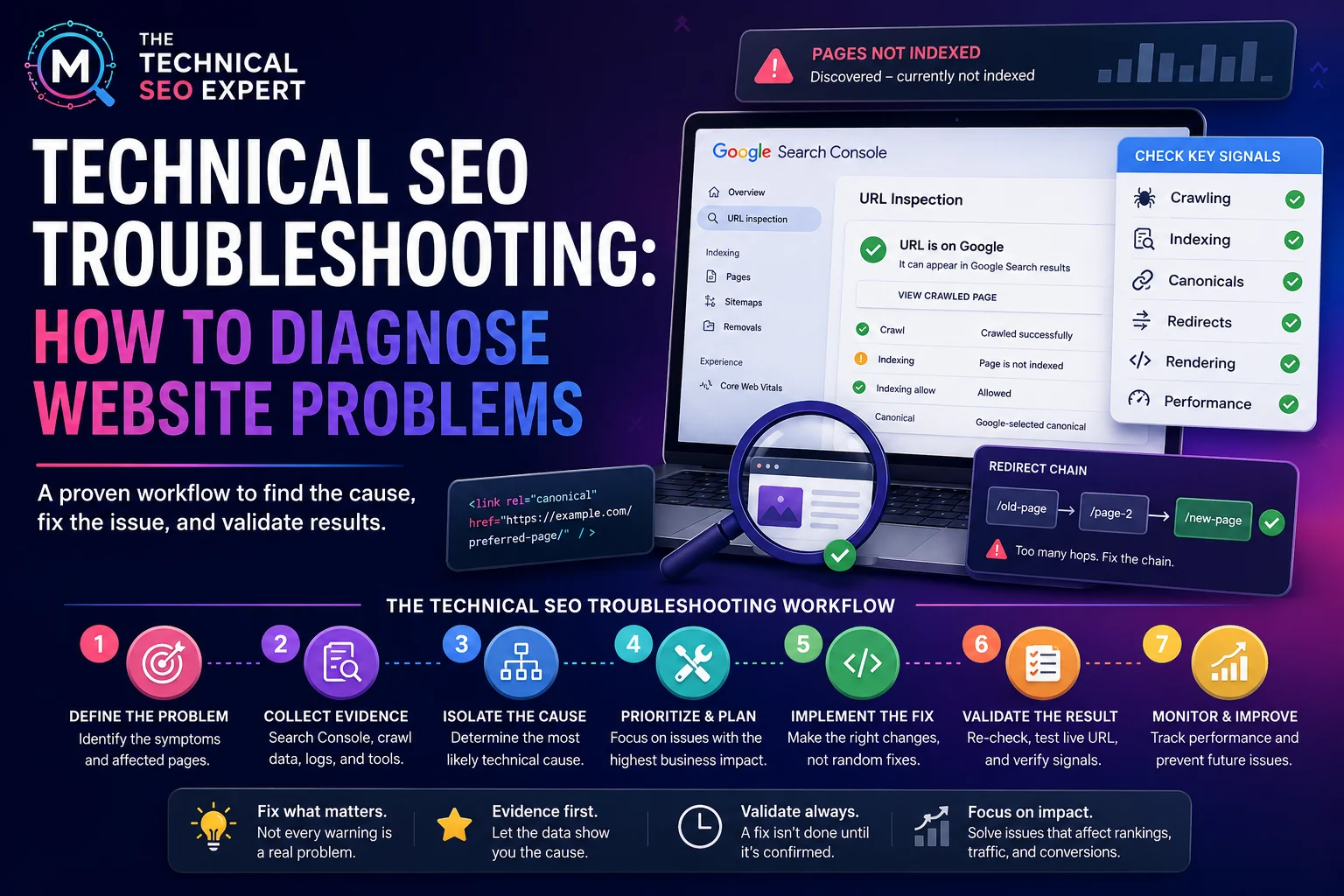
If organic traffic or indexing changed after a migration, the investigation should compare the old and new states. Typical causes include missing redirects, irrelevant redirect destinations, noindex left on production, canonical mistakes, internal links still pointing to old URLs, sitemap inconsistencies, lost content, navigation changes, rendering regressions, or pages removed without suitable replacements.
If post-launch validation finds implementation problems, see post-migration Technical SEO fixes.
For the informational planning workflow, use the website migration SEO checklist.
Yes. Pre-launch review can cover the URL inventory, redirect map, staging controls, canonicals, internal links, sitemaps, templates, and launch requirements.
Yes. URL mapping is a central migration deliverable when public URLs change. Important old URLs should be mapped to relevant final destinations and tested before or immediately after launch.
Indexing controls, canonical tags, redirects, internal links, navigation, sitemaps, rendered content, and representative page templates should all be checked before launch where the staging environment allows it.
No. Temporary visibility changes can occur during site moves. The service focuses on reducing avoidable risk, preserving relevant signals, and validating the migration quickly.
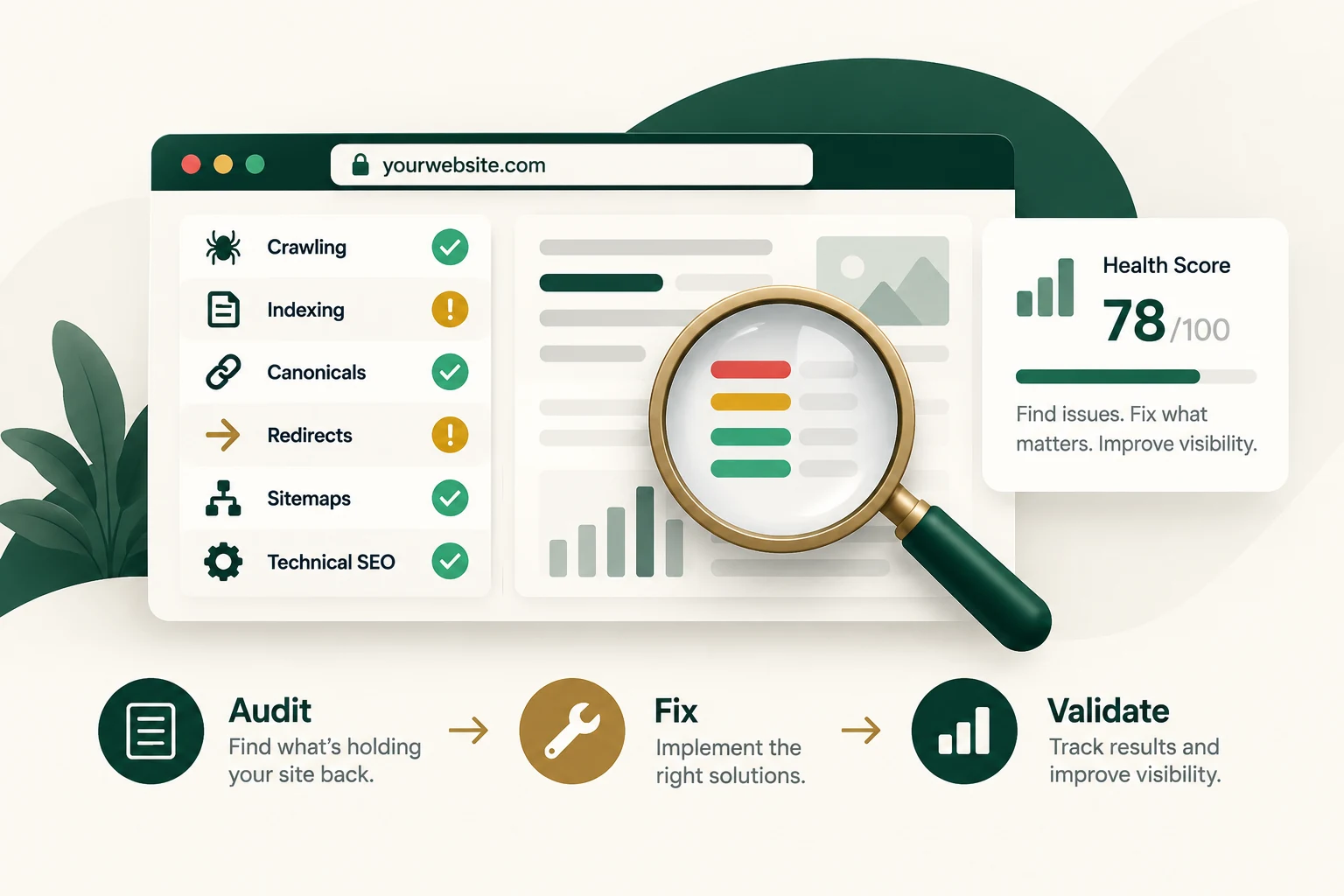
Yes. A post-migration audit can compare redirects, canonicals, indexability, internal links, content, sitemaps, and Search Console evidence to determine whether the migration introduced technical problems.