Schema Markup & JSON-LD Case Study
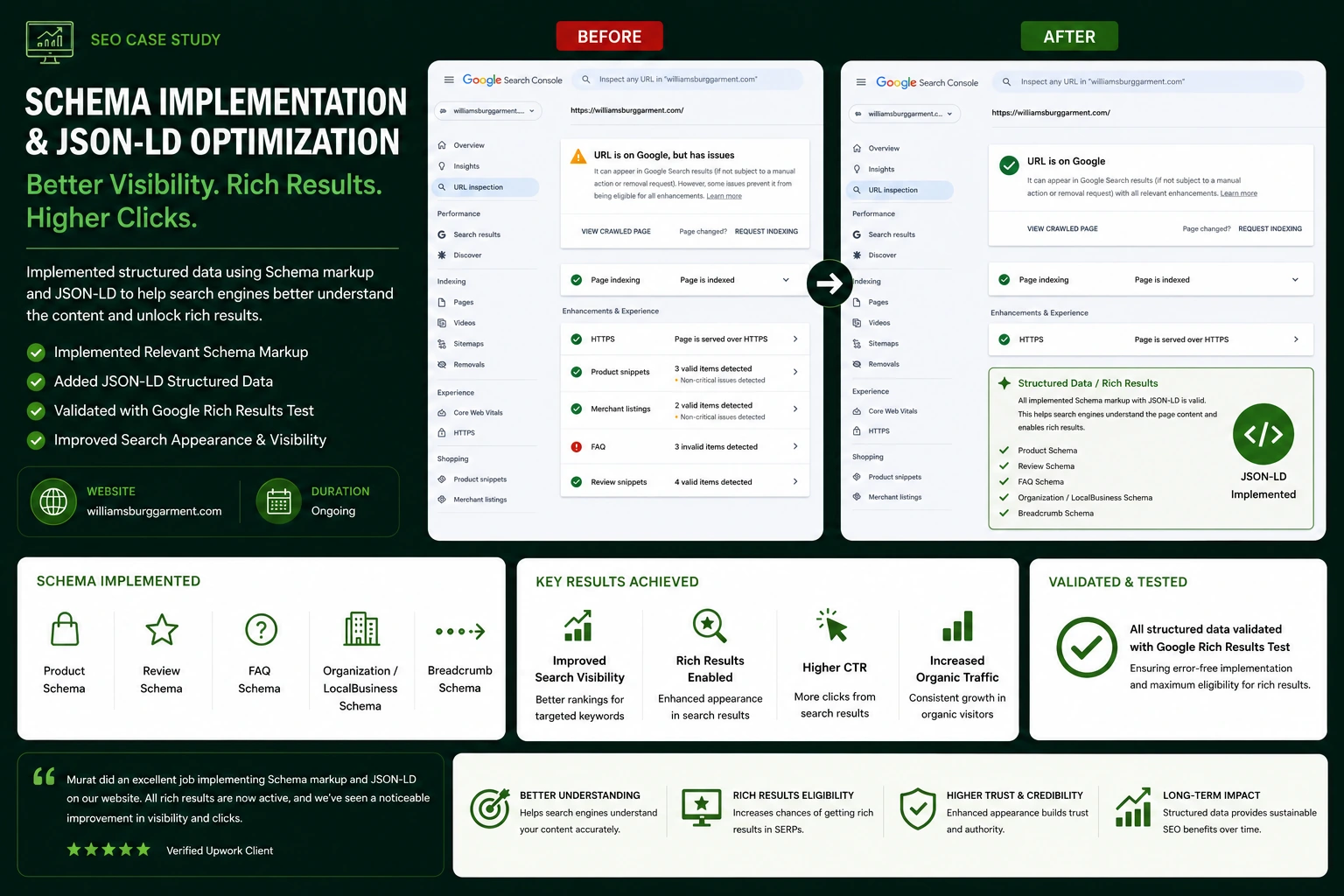
A Technical SEO project removing conflicting structured data and rebuilding sitewide JSON-LD for clearer rich-result processing and validation.
View the schema case study →I can review current markup, identify the schema types that actually apply, clean duplicate or stale JSON-LD, and validate the implementation after deployment.
Get Help With Schema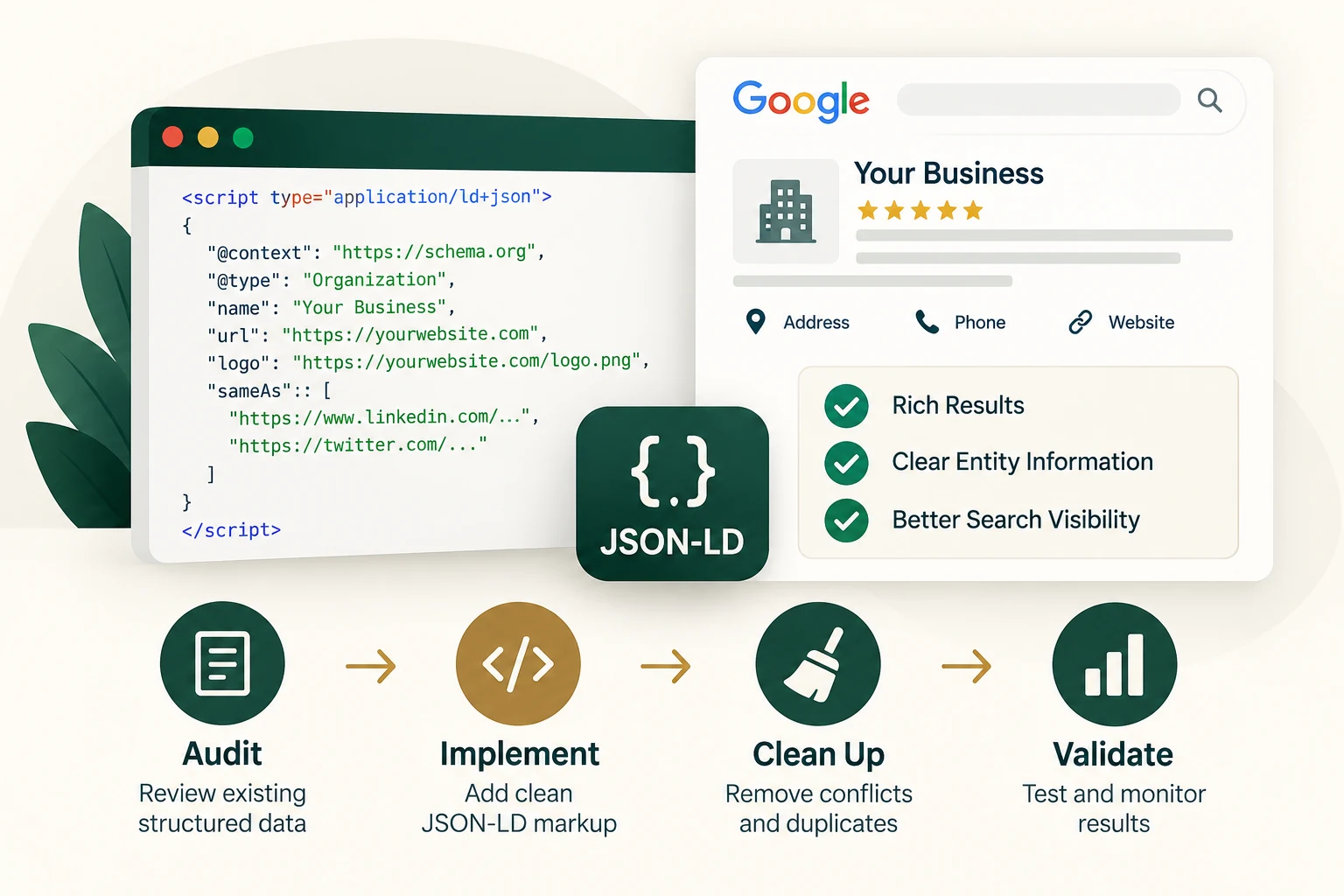
Schema markup should describe the entities and information that genuinely exist on your website—not create unsupported claims or duplicate whatever a plugin already outputs. I audit existing structured data, map page templates to appropriate schema types, implement or specify JSON-LD, clean conflicting markup, and validate the final output.
The first decision is not “how much schema can we add?” It is “which structured data accurately describes this page and its visible content?” The audit maps page templates to relevant schema.org types and Google-supported rich-result requirements where applicable.
Organization or LocalBusiness where appropriate, with consistent name, URL, logo, sameAs references, and relationships to people or locations.
Person and author relationships where the site presents identifiable authors or experts.
Article or BlogPosting with accurate author, publisher, dates, headline, and visible-content alignment.
Product, ProductGroup, Offer, price, availability, reviews, shipping, and return details when the page genuinely supports them.
BreadcrumbList reflecting the visible or intended hierarchy.
Service or other schema.org vocabulary where it accurately represents the page, while distinguishing general schema.org types from Google-specific rich-result eligibility.
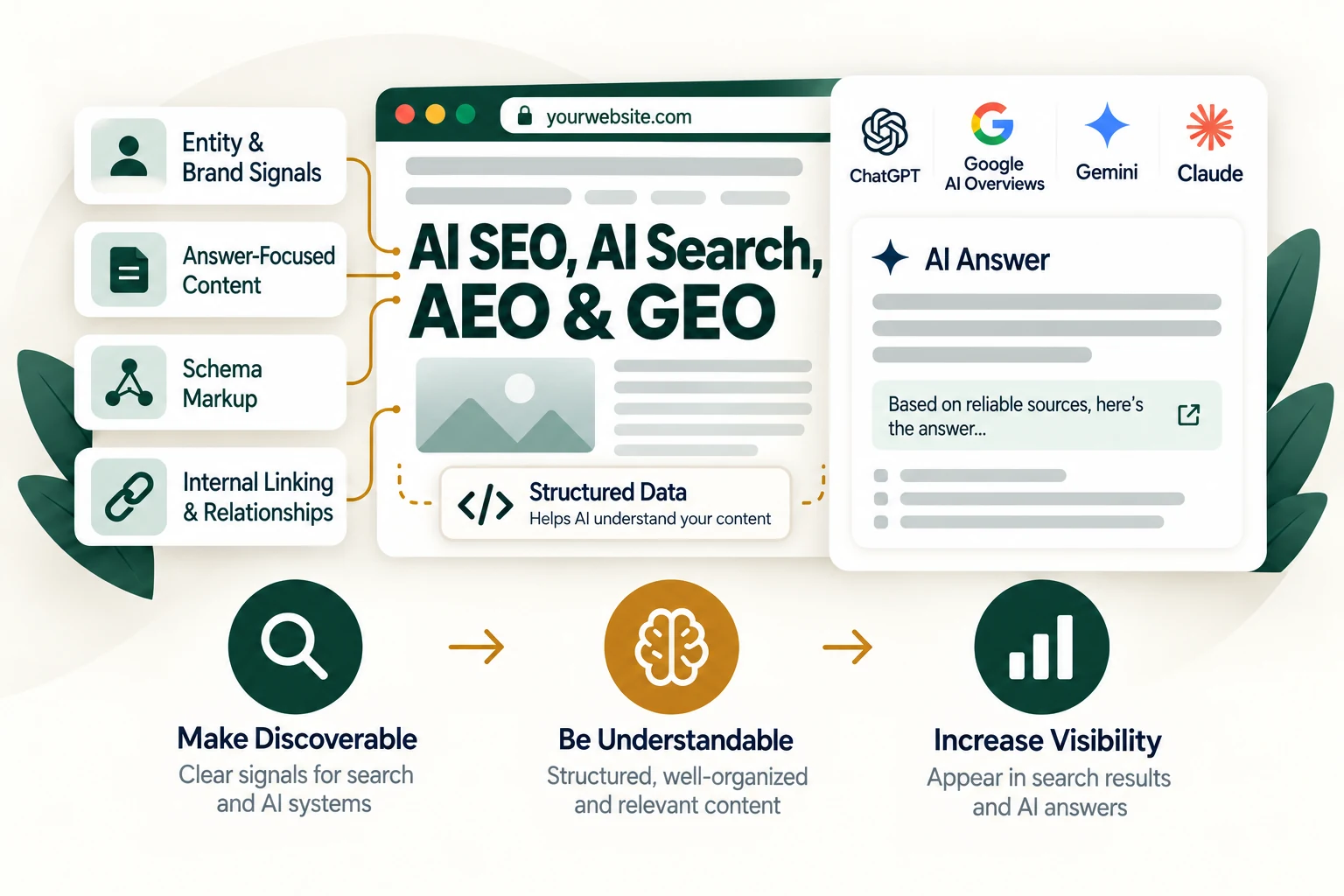
JSON-LD is often the most practical format for structured data because it can be managed separately from visible HTML while still describing the page accurately. The implementation should create consistent relationships rather than isolated blocks that contradict each other. For a focused next step, review AI Search Optimization.
Depending on the site, this may include connecting the website to the organization, articles to their authors and publisher, products to offers, breadcrumbs to page hierarchy, or relevant entities through mainEntity and sameAs relationships where appropriate.
Structured-data problems frequently come from multiple systems trying to help at the same time. A theme may output Organization and Article schema, an SEO plugin may add another set, and a specialist app may add its own Product or review markup.
The remediation process identifies the source of each block, decides which system should own the output, and removes or reconciles the conflict.
Schema.org provides a broad vocabulary. Google supports specific structured-data features and defines additional requirements for eligibility in certain Search experiences. A valid schema.org type does not automatically mean Google will show a rich result.
The implementation therefore separates three questions: Is the markup semantically correct? Does it accurately reflect visible content? Does Google support a relevant search feature for this type?
Structured data can be implemented through templates, CMS fields, plugins, theme logic, tag management, or application code depending on the website. The preferred approach is the one that keeps the output accurate, maintainable, and consistent across the relevant page type.
Template-level implementation is usually preferable to manually maintaining large numbers of individual pages when the underlying data is structured and reusable.
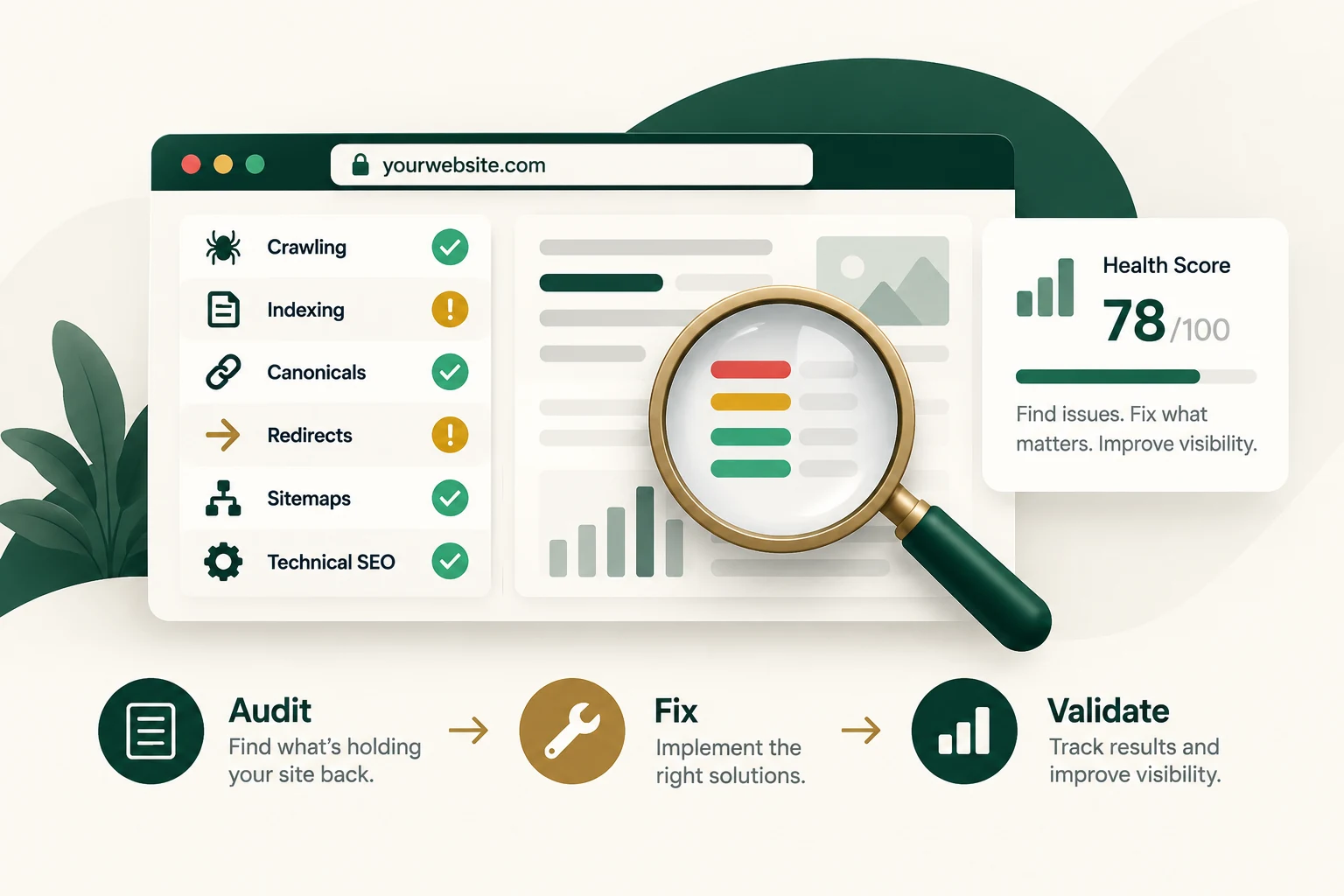
Validation should happen before and after deployment. Google’s Rich Results Test is used for Google-supported features, while the Schema Markup Validator can help check broader schema.org syntax and relationships. Search Console enhancement reports may provide additional evidence for supported features after Google processes the pages.
Validation also includes comparing the markup with what users actually see. Passing a validator does not make inaccurate markup acceptable.
Structured data can help search engines understand page information and make a page eligible for supported search features. It does not guarantee a rich result, ranking improvement, AI citation, or inclusion in a generated answer. The service is positioned around correct implementation, entity clarity, conflict cleanup, and validation—not guaranteed display outcomes.
See proof of this process in the schema markup fix and JSON-LD implementation case study.
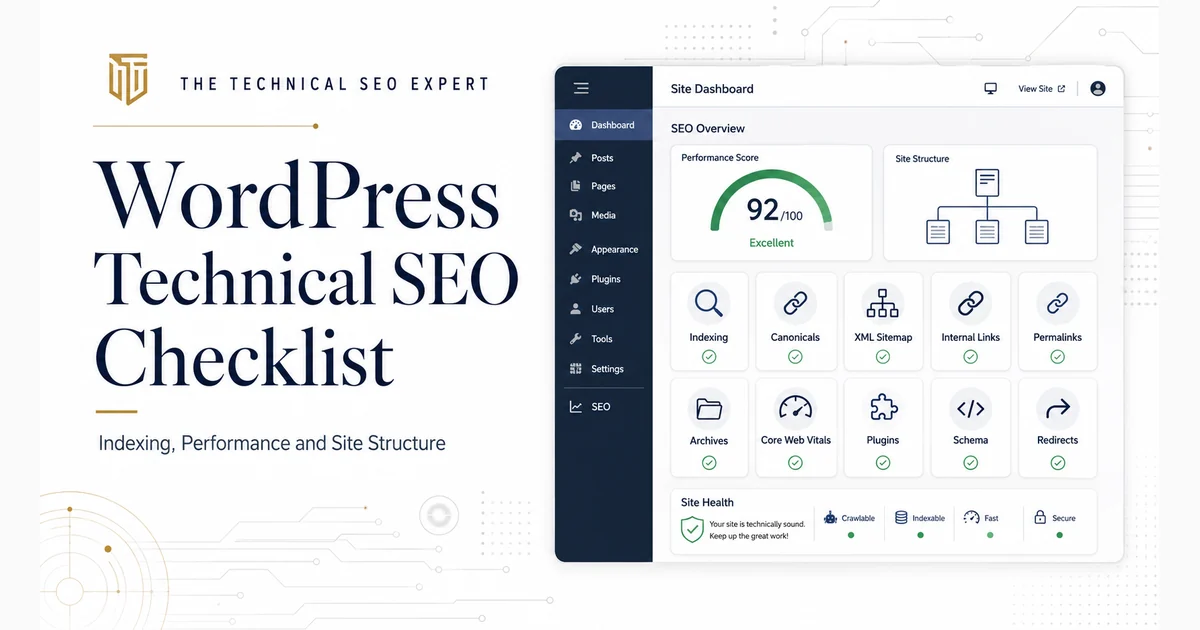
For broader technical implementation needs, see Technical SEO implementation.
That depends on the visible content and page templates. The correct approach is to map each template to schema types that accurately describe the page rather than adding every available type.
Yes. The first step is to identify which system generates each block, then consolidate or remove conflicting output so one maintainable implementation owns the relevant entity data.
These and other types can be implemented where they genuinely apply to the page and the available data. The exact scope depends on the site and supported content.
No. Valid structured data can support eligibility for certain features, but Google decides whether and how a result is displayed.
No. There is no schema markup that guarantees inclusion or citation in AI-generated answers. Structured data is one supporting layer for machine-readable clarity, not a citation switch.