Schema Markup & Entity Implementation
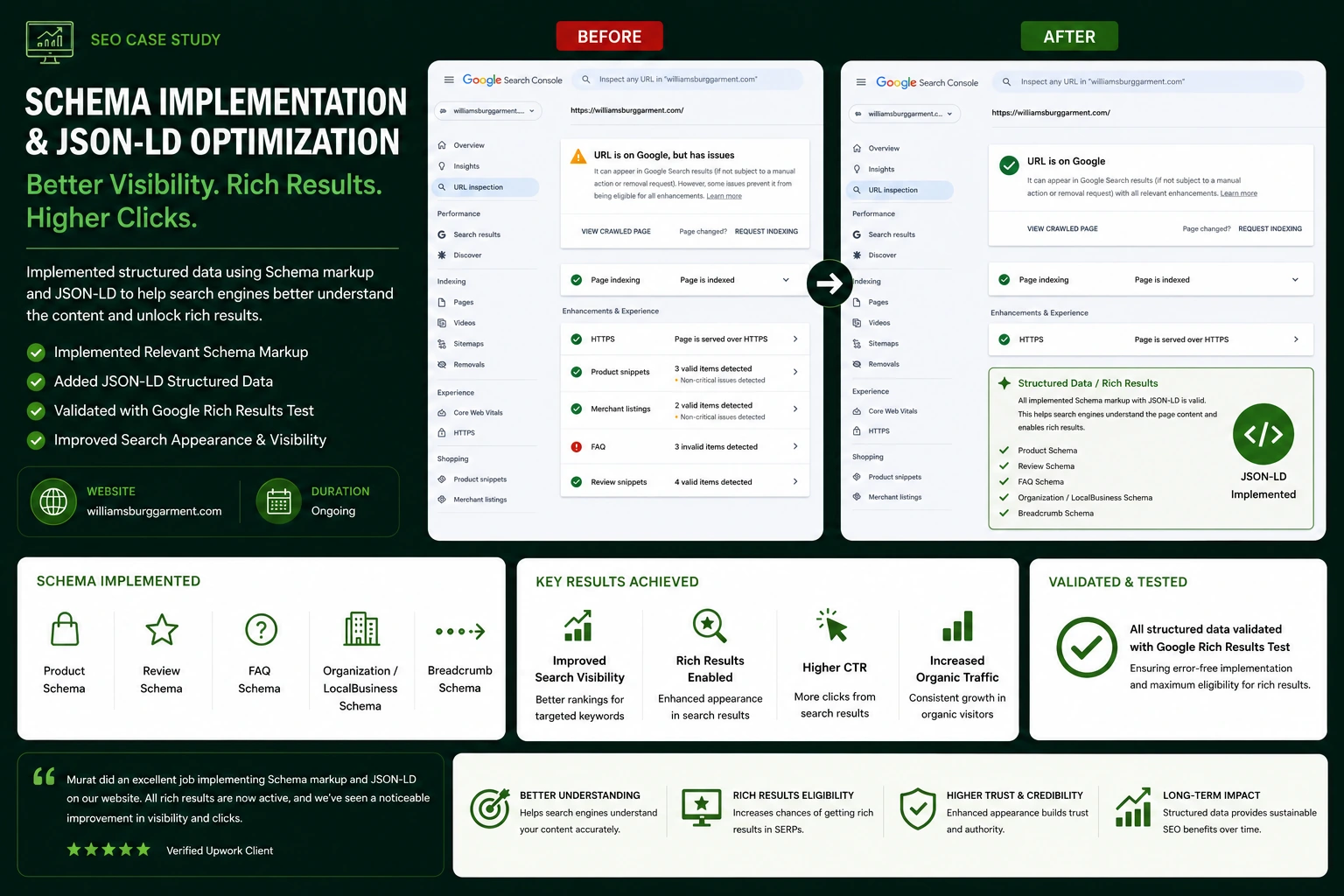
A Technical SEO project removing conflicting structured data and rebuilding sitewide JSON-LD for clearer rich-result processing and validation.
View related entity/schema proof →I can review indexability, entity clarity, structured data, answer-focused content, internal linking, and source-page organization, then identify practical opportunities and measurement limits.
Discuss AI Search Visibility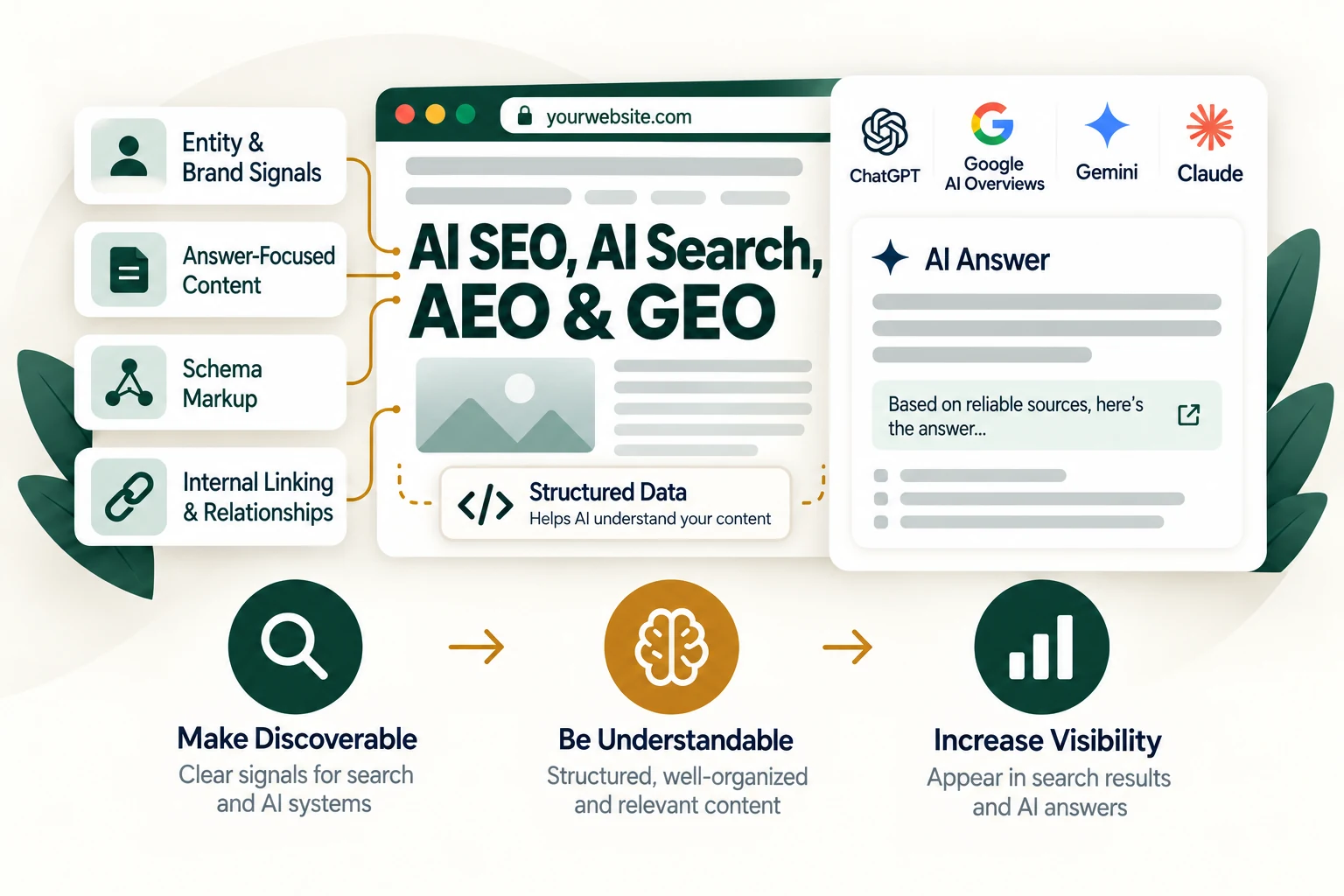
AI Search Optimization is the umbrella I use for work often described as AI SEO, AEO, or GEO. The objective is to make your business, expertise, important pages, entities, and evidence clearer and easier to retrieve across traditional search and AI-generated search experiences—without pretending there is a secret markup or guaranteed citation formula.
The market uses AI SEO, Answer Engine Optimization (AEO), Generative Engine Optimization (GEO), and AI Search Optimization inconsistently. Rather than treating them as separate technical systems, this service uses AI Search Optimization as the commercial umbrella and focuses on the website foundations that support machine understanding, retrieval, source eligibility, and clear brand/entity representation.
The work may include Technical SEO, entity clarity, information architecture, structured data, answer-focused content, first-party evidence, internal linking, and measurement of visibility across relevant AI search experiences.
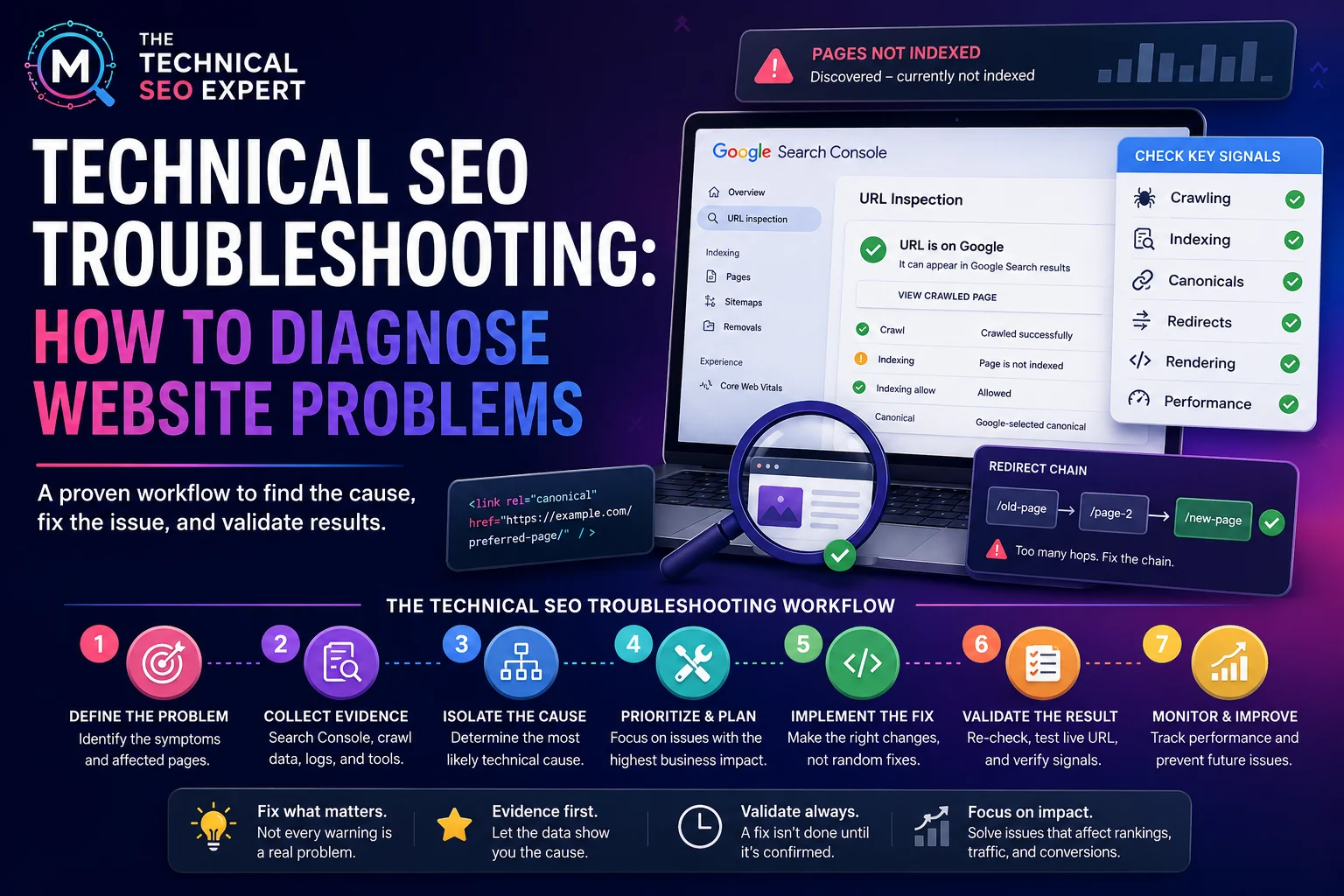
A page that cannot be reliably crawled, indexed, rendered, or exposed to the relevant search system is a weak candidate for retrieval regardless of how “AI-optimized” the copy sounds. Foundational Technical SEO remains the first layer. For a focused next step, review Technical SEO audit services.
For the broader role of technical foundations, see how Technical SEO supports AI search visibility.
AI search systems need to connect information about organizations, people, products, services, and topics. The website should make those relationships explicit and consistent rather than scattering contradictory names, descriptions, authorship, or evidence across unrelated pages.
Answer-focused content does not mean writing every page as an FAQ or producing generic AI summaries. It means making the page’s purpose, answer, evidence, and supporting detail easy to identify.
Useful patterns can include concise answer-first introductions, clear question-led headings, explicit nouns, definitions where needed, structured comparisons, decision tables, examples, and supporting evidence. These elements should serve users first; extractability is a by-product of clarity.
Information architecture matters because a strong answer should sit within a coherent topic and entity structure. Pillar pages, child articles, service pages, case studies, and author or organization pages should reinforce each other instead of existing as isolated content.
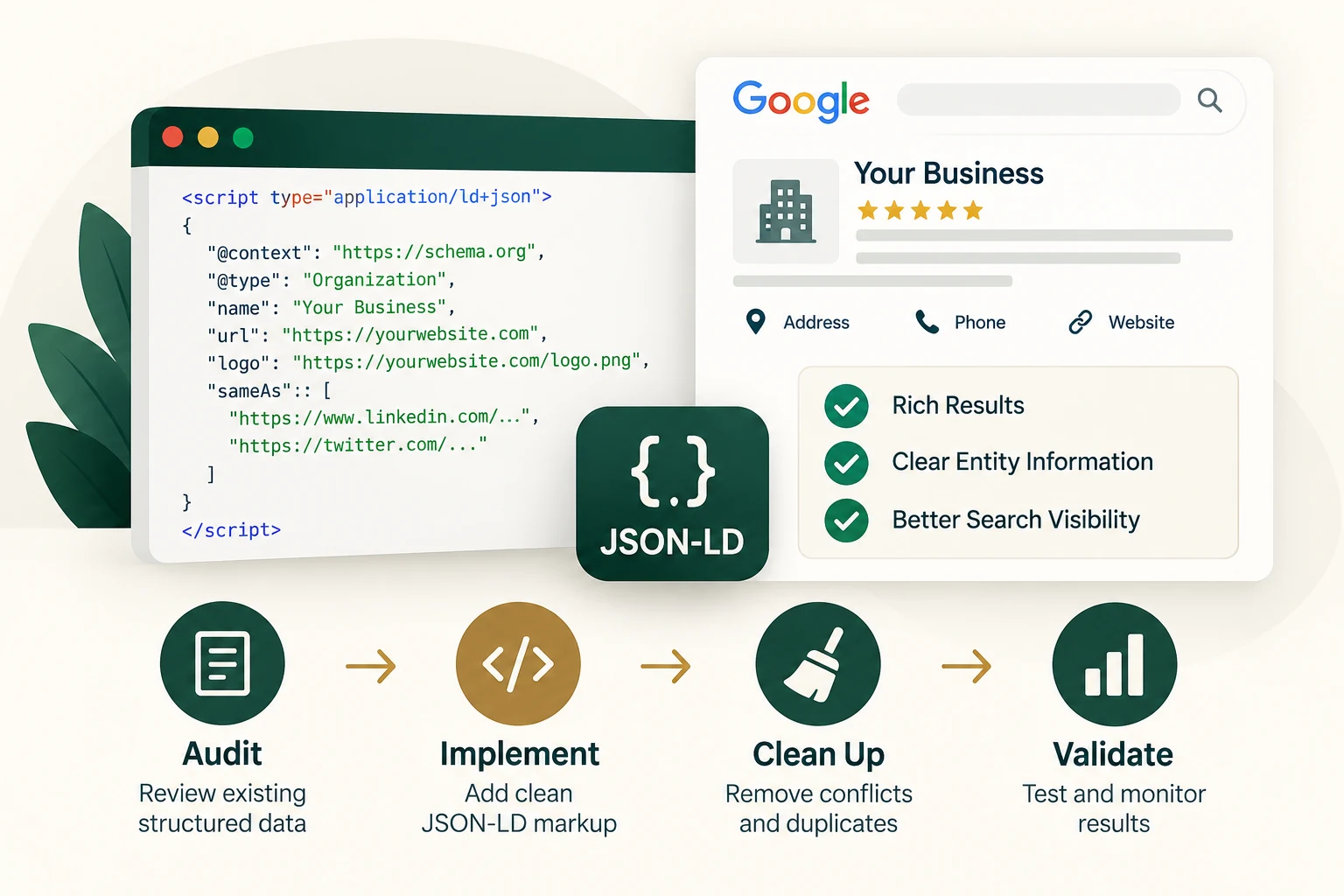
Structured data can help describe entities and relationships in machine-readable form when it accurately reflects visible content. Relevant implementations may include Organization, Person, Article, Product, Service, BreadcrumbList, or other appropriate schema.org vocabulary.
The purpose is clarity and consistency—not adding “AI schema.” Google does not require special AI Overview markup. Structured data remains one supporting layer within broader search and entity optimization.
Where structured data genuinely applies, see schema markup and structured data implementation.
Internal links help connect the pages that define your expertise, services, evidence, and topic coverage. For AI search visibility, this can also improve how clearly the site communicates relationships between a claim and the page that supports it.
Google’s guidance is explicit that there is no special AI Overview optimization or unique markup required for AI features. The practical work remains familiar: make valuable pages eligible for Search, provide clear content, allow appropriate crawling and indexing, support the site with strong internal structure, and use structured data where it accurately describes the content.
This is why the service avoids claims such as “AI Overview schema,” guaranteed citations, or a secret keyword list for ChatGPT. Those claims create false precision in an environment where platform behavior and retrieval systems continue to evolve.
AI search visibility can be monitored, but measurement is less standardized than traditional organic search. Depending on the business, the review may track a defined set of high-value questions, brand and competitor mentions, source/citation appearances, landing-page referrals where available, Search Console visibility, and changes in the site’s entity and content coverage.
Measurement should be treated as directional evidence rather than a guarantee. AI-generated answers can vary by platform, query wording, user context, freshness, model changes, and retrieval source availability.
Structured-data and entity work can be seen in the schema markup and entity implementation case study.
Broader search-performance evidence is available in the organic visibility growth case study, while recognizing that traditional organic growth and AI citations are not the same outcome.
AI Search Optimization is an umbrella for work intended to improve how clearly a website, brand, entities, expertise, and source pages can be understood and retrieved across AI-generated and traditional search experiences. It can include Technical SEO, content structure, entity clarity, structured data, internal linking, and evidence organization.
No. They are better treated as extensions of search and content strategy. Crawlability, indexability, relevance, site structure, authority, and content quality still matter.
No. Google does not require special AI Overview schema or unique markup. Use structured data only where it accurately describes the visible content and page entities.
No. Citation and mention behavior is controlled by the platform and can vary by query, user context, retrieval system, freshness, and model changes. The service focuses on improving clarity, eligibility, source organization, and measurable visibility—not guaranteeing inclusion.
Measurement can use a defined prompt/query set, brand and competitor mentions, citation/source observations, referral data where available, Search Console evidence, and changes in content/entity coverage. The results are interpreted directionally rather than as a guaranteed ranking metric.