How to Find and Fix Technical SEO Issues
Learn how to identify and fix common technical SEO issues affecting crawling, indexing, internal linking, and website visibility in Google.
Follow the diagnostic workflow →Bring an existing audit, issue list, Search Console problem, or developer backlog. I can confirm the root cause, prioritize the work, and move the technical changes toward deployment and QA.
Get Technical SEO Help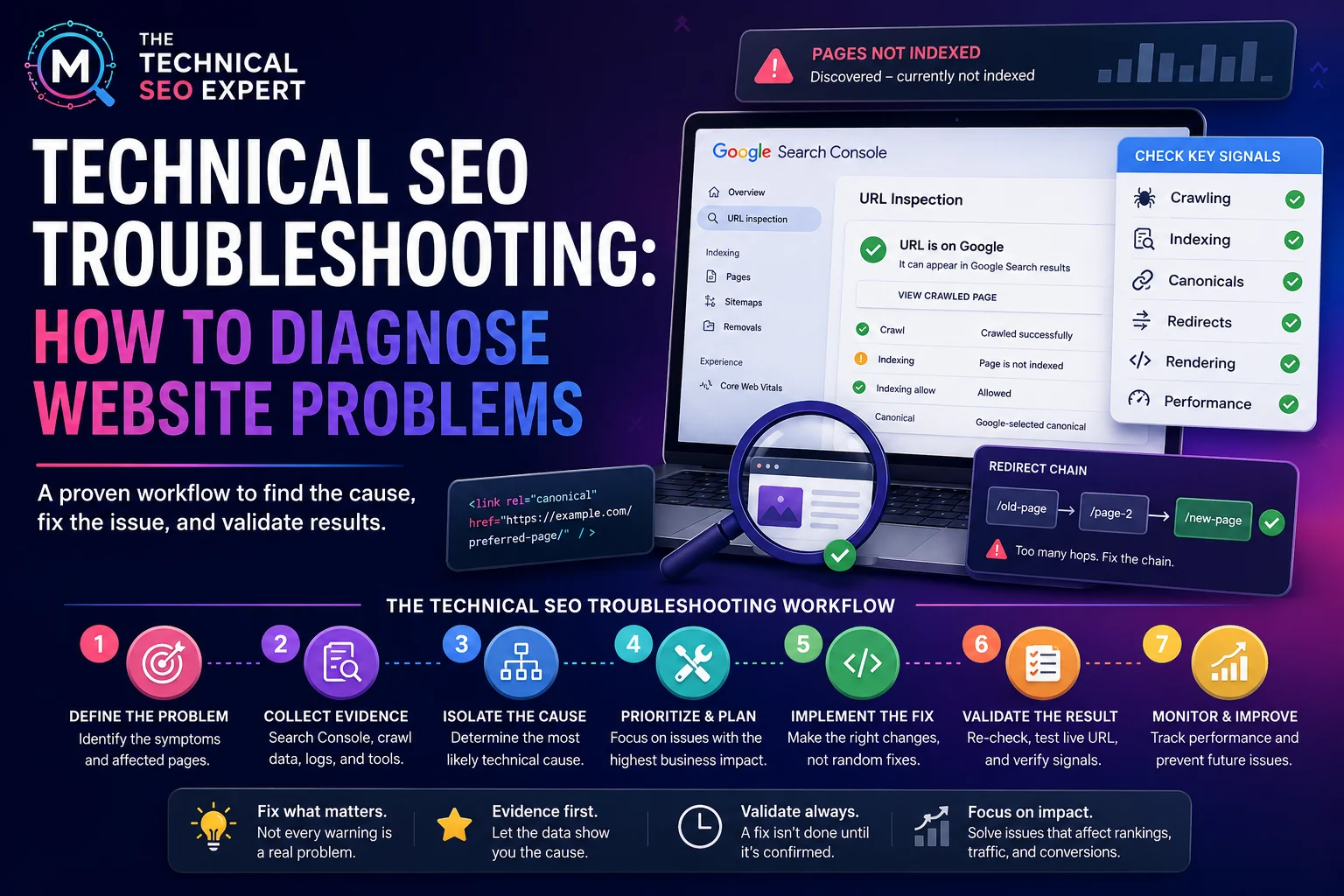
Already know the website has Technical SEO problems? I can implement selected fixes where access and platform scope allow, or turn an existing audit into precise, testable requirements for your developer. The process is implementation-first: reproduce the issue, define the expected behavior, ship or specify the fix, then validate it after deployment.
This service is for websites where the problem is already known or can be reproduced quickly. If the root cause is unclear, a diagnosis-first audit is usually safer before implementation. For a focused next step, review Google Search Console indexing and recovery service.
If the root cause is not established yet, start with a Technical SEO audit.
Implementation scope depends on the platform, codebase, access, and the team responsible for deployment. Common fix classes include:
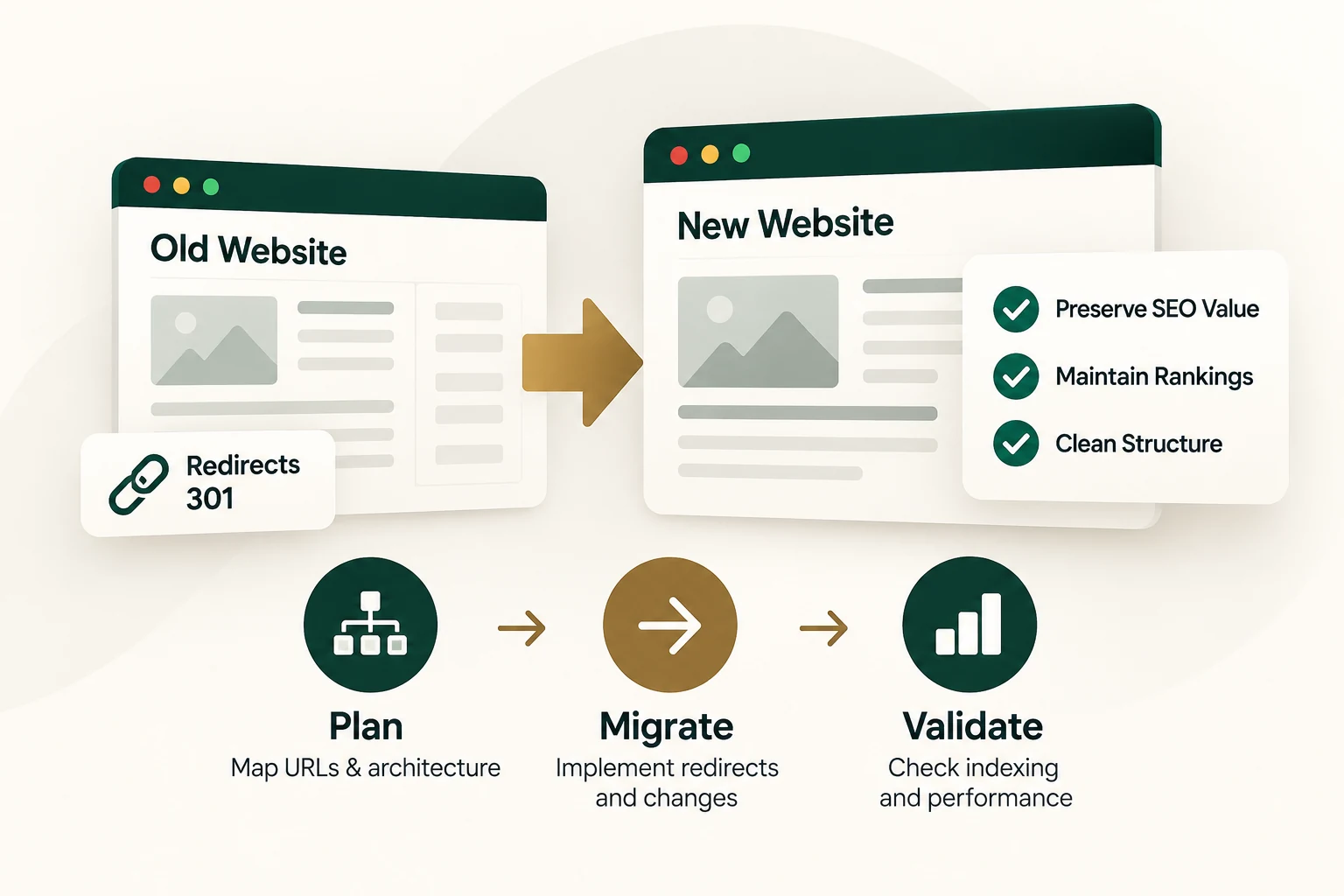
Redirect maps, redirect chains, redirect loops, outdated destination rules, broken internal links, and URL normalization.
Incorrect self-referencing canonicals, cross-page canonicals, template-level canonical output, and conflicts between internal links, sitemaps, and canonical targets.
Robots.txt changes, noindex rules, X-Robots-Tag behavior, template-level indexability, and staging controls.
Removing redirects, errors, noindex pages, and non-canonical URL variants; aligning sitemap output with the intended indexable inventory.
4xx/5xx conditions, broken internal links, missing destinations, and template routing issues.
Updating redirected links, improving discovery of important pages, correcting orphan patterns, and strengthening relevant hub relationships.
Technical metadata, rendered HTML, canonical or robots output, and other template behavior that affects search engines.
An existing audit can shorten the path to implementation, but the recommendation still needs to be reproducible and current. Before changing a production website, I verify the affected URL pattern, current behavior, expected outcome, dependencies, and whether the audit recommendation still matches the live environment.
This is particularly important when an audit is several months old, the website has changed since the report, or the recommendation was generated automatically without implementation context.
When development work is required, the handoff should reduce ambiguity. A useful SEO ticket should explain:
Some Technical SEO fixes can be handled through CMS, theme, plugin, or platform configuration. Others require template or application code. The implementation approach should fit the system instead of forcing every site into the same checklist.
For example, a WordPress canonical issue may come from an SEO plugin or theme template, while a custom JavaScript site may require framework-level metadata or rendering changes. The deliverable should identify the responsible layer so the work reaches the right person.
Technical changes can affect more than SEO. Redirects can influence application routing. Canonical logic may affect several templates. Performance fixes can change design or third-party functionality. Robots rules can hide important sections if applied too broadly.
Where the risk justifies it, changes should be tested in staging, reviewed against representative templates, and deployed with a clear rollback path. “Fixing SEO” should not break checkout, forms, navigation, analytics, or other business-critical functions.
After deployment, the relevant URLs and templates are re-tested. Depending on the change, QA may include a fresh crawl, redirect checks, status codes, canonical output, robots directives, sitemap files, rendered HTML, internal links, structured data, or Search Console live testing. For a focused next step, review Technical SEO fixes case study.
This final validation step is what turns a recommendation into a completed Technical SEO implementation.
For the broader informational workflow, see how to find and fix Technical SEO issues.
See practical proof in the Technical SEO fixes: indexing, redirects and crawlability case study.
Yes, where the platform, access, and scope allow. For code owned by your developer, I can provide precise requirements, examples, acceptance criteria, and post-deployment validation.
Yes. I first verify that the findings are still reproducible and appropriate for the live site, then prioritize and translate them into an implementation plan.
These are common Technical SEO implementation areas. The exact fix depends on the platform, template behavior, and root cause.
The implementation process considers dependencies, representative templates, staging where available, acceptance criteria, and rollback risk. High-risk changes should be tested before broad deployment.
If missing or deindexed pages are the core problem, the Google Search Console indexing and recovery service is the more focused starting point. See GSC indexing recovery for indexing-specific diagnosis and remediation.