Google Search Console Indexing Issues
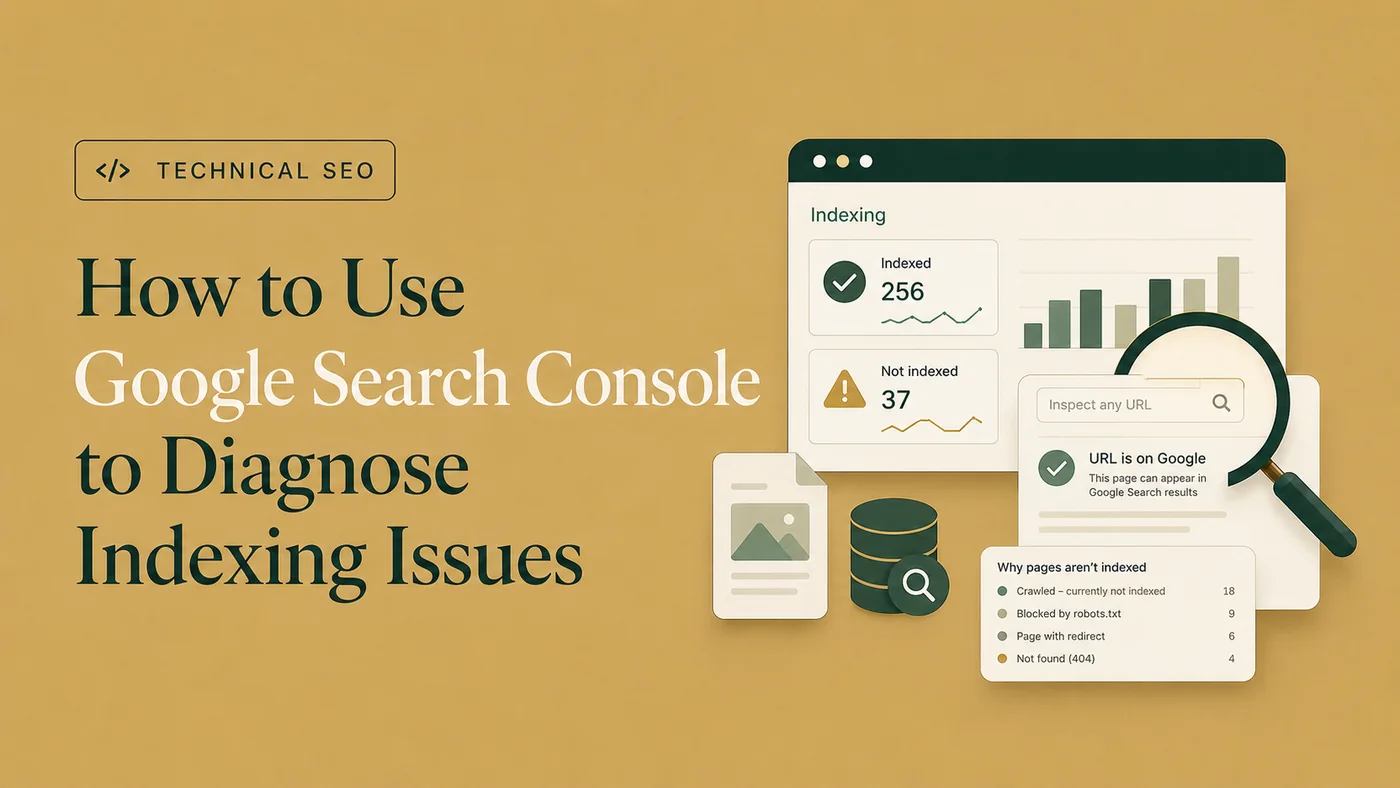
Learn how to use Google Search Console’s Page Indexing report and URL Inspection tool to identify, investigate, and fix indexing issues.
Read the GSC diagnosis guide →I can review Google Search Console indexing reports, inspect priority URLs, identify the underlying cause, and separate genuine indexing risk from normal exclusions.
Get Help With Indexing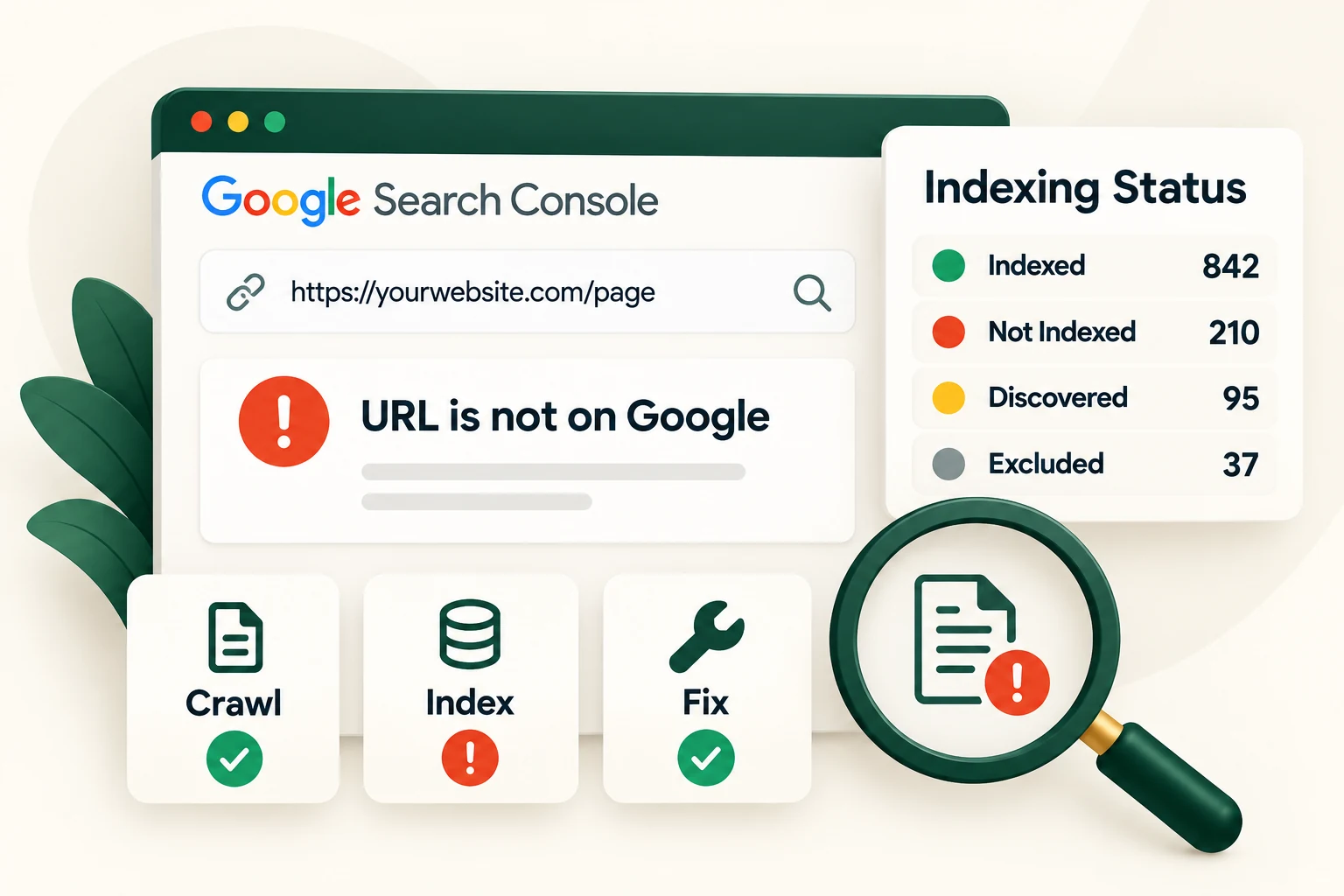
If important pages are missing from Google, the first job is not to “submit them again.” It is to determine why they are not being indexed, whether the exclusion is expected, and which technical or structural condition is responsible. This service combines Google Search Console evidence with URL-level and sitewide diagnosis, implementation guidance, and validation.
This service is designed for websites where indexing is affecting commercially or strategically important URLs—not for forcing every discovered URL into Google.
The Page Indexing report tells you what Google currently reports about groups of URLs. It does not automatically tell you which exclusions are errors. Many websites correctly exclude redirects, duplicate URLs, filtered pages, search results, and other low-value URL types.
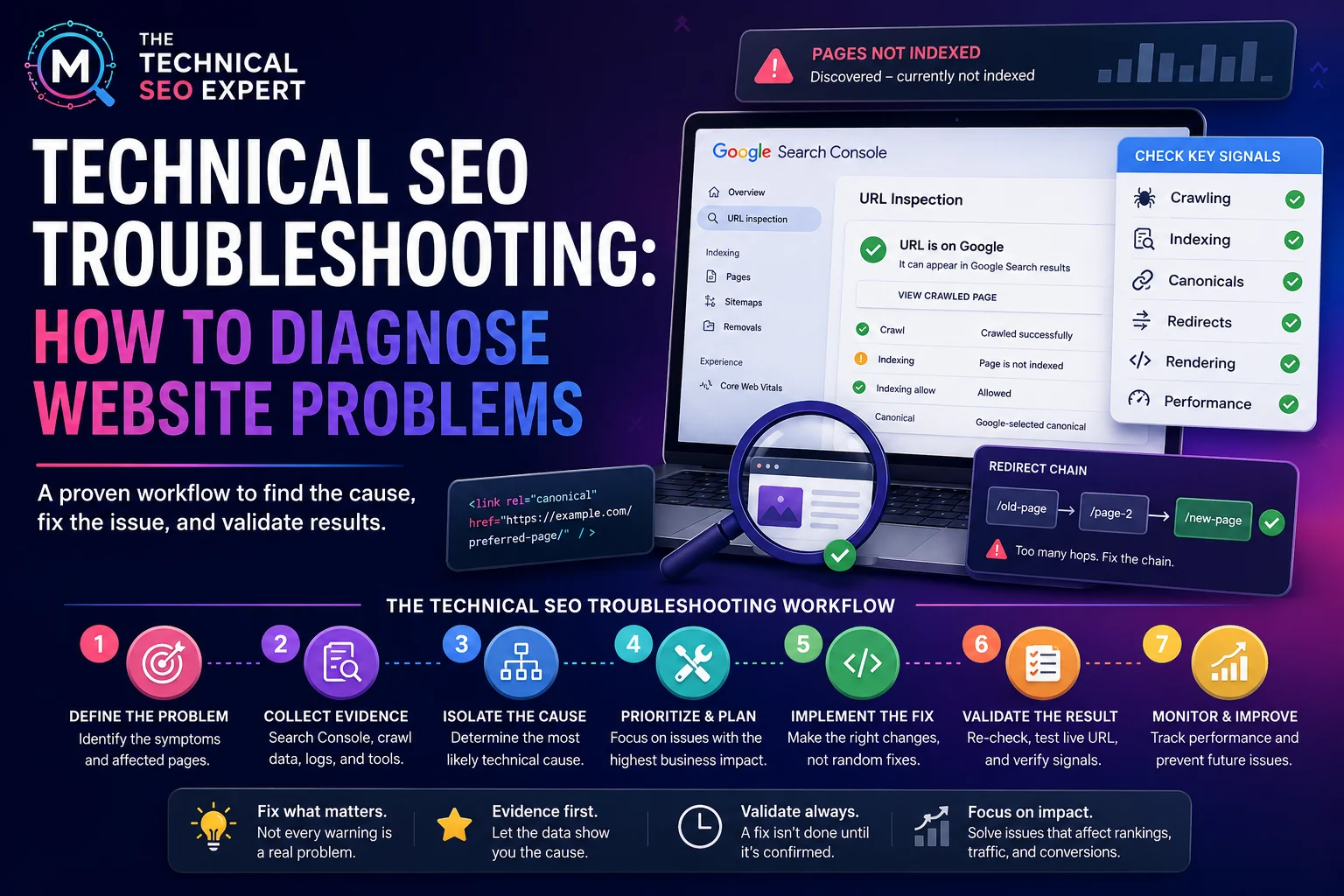
The service therefore starts by mapping Search Console statuses to the website’s intended indexable inventory. Priority pages are separated from expected exclusions, and representative URLs are inspected to determine whether the reported status reflects discovery, crawling, indexability, canonicalization, rendering, or page-value issues.
For the detailed educational workflow, see how to diagnose indexing issues in Google Search Console.
For individual priority URLs, the diagnosis may include:
When many URLs share the same status, the root cause is often template-level or architectural. The service looks for repeated patterns rather than treating every URL as a separate problem.
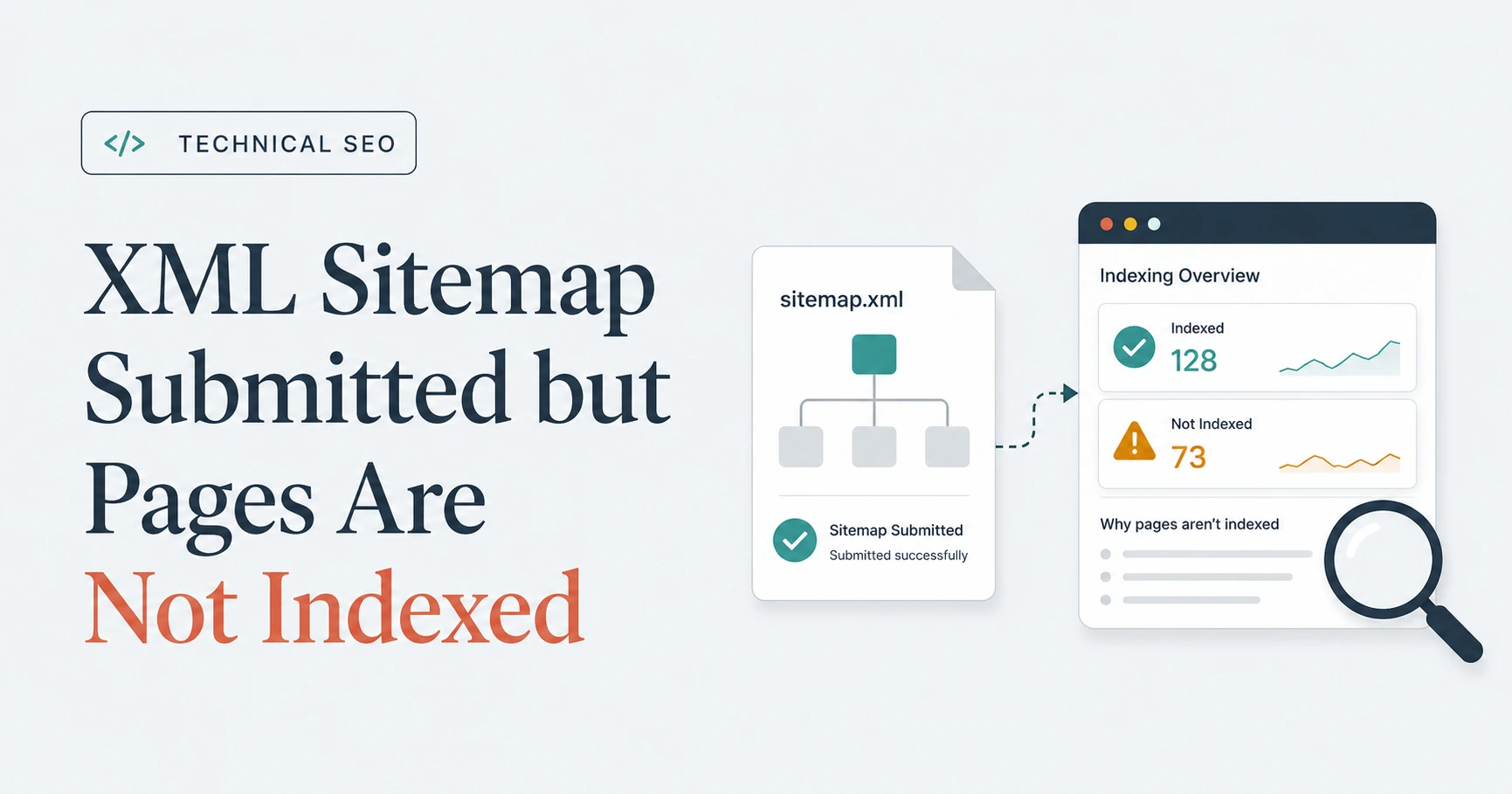
Redirected, noindexed, error, stale, or non-canonical URLs can create an inaccurate inventory of what the site wants indexed.
Priority URLs may exist in the sitemap but receive weak or no crawlable internal links.
Filters, parameters, tags, alternate paths, and CMS behavior can create many similar URLs that compete for canonical selection.
A plugin, theme, or deployment can apply noindex, canonical, or robots behavior to an entire template group.
Deep or fragmented structures can reduce how clearly important pages are surfaced.
5xx errors, intermittent availability, CDN rules, or bot protection can interfere with reliable crawling.
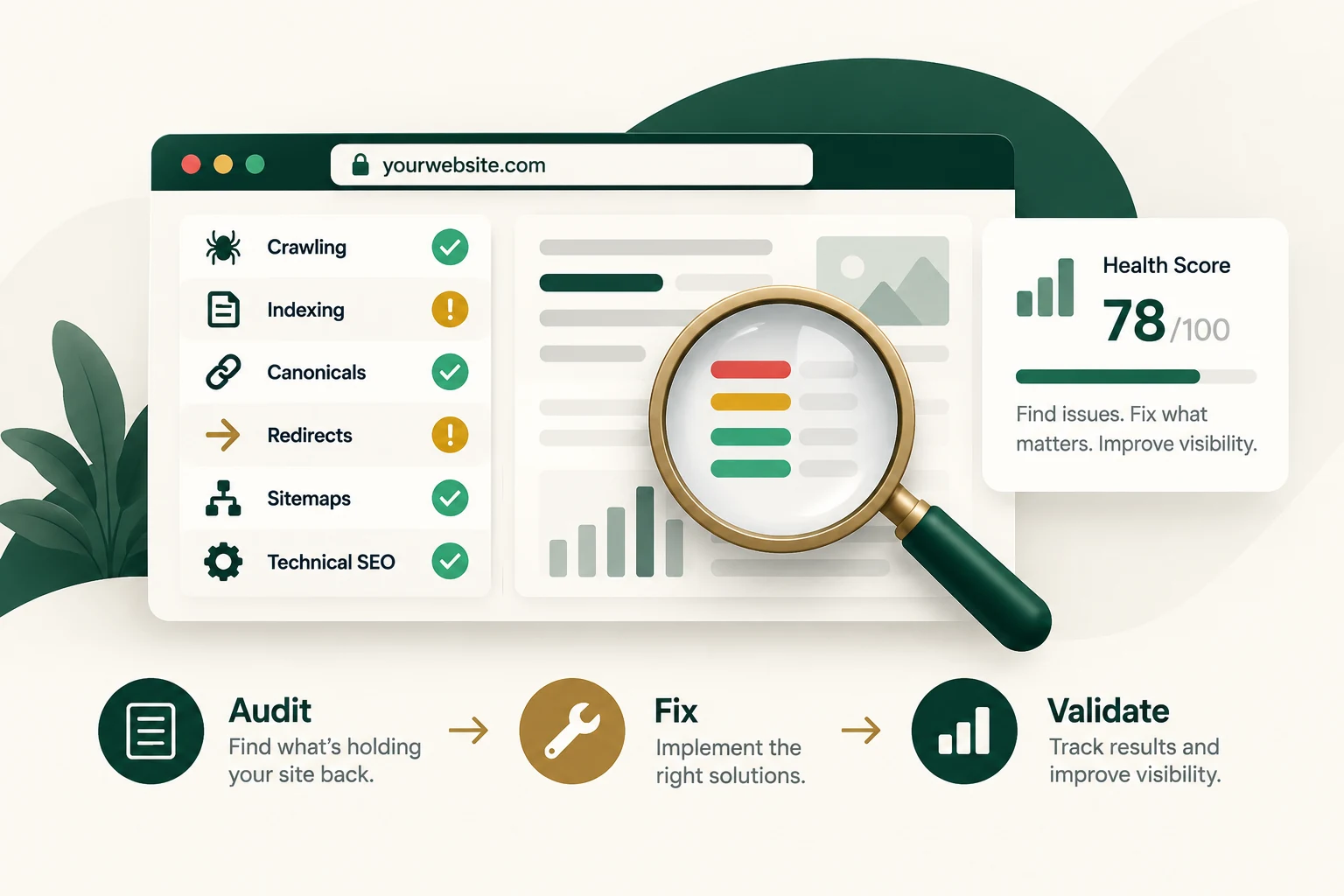
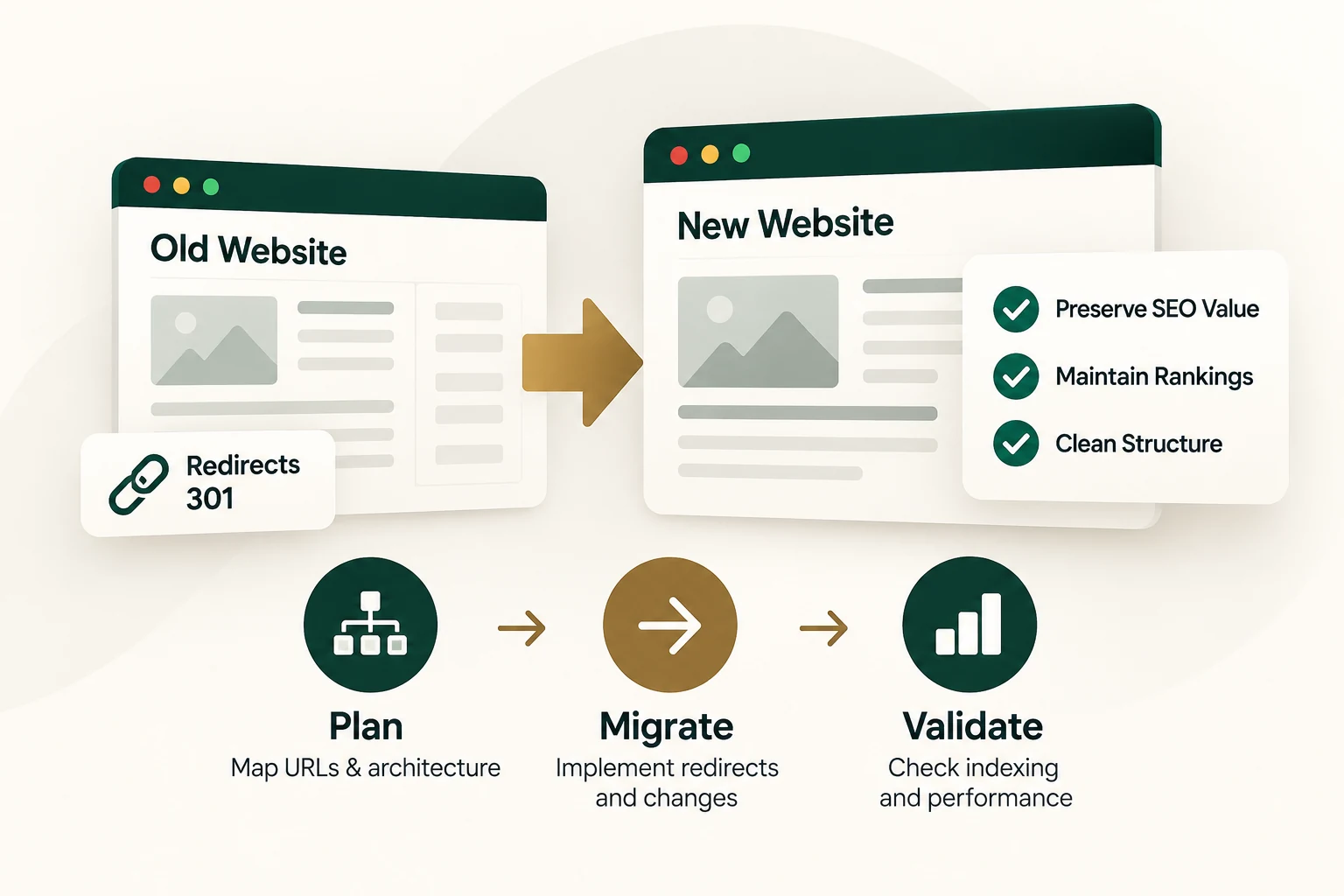
A page that was previously indexed and disappears requires a before-and-after investigation. Relevant evidence may include URL changes, canonical changes, redirects, noindex directives, template releases, content consolidation, server availability, sitemap changes, internal-link changes, or a broader migration.
The objective is to identify whether the page should still be indexed and, if so, what changed. “Request indexing” is not a substitute for correcting the underlying condition.
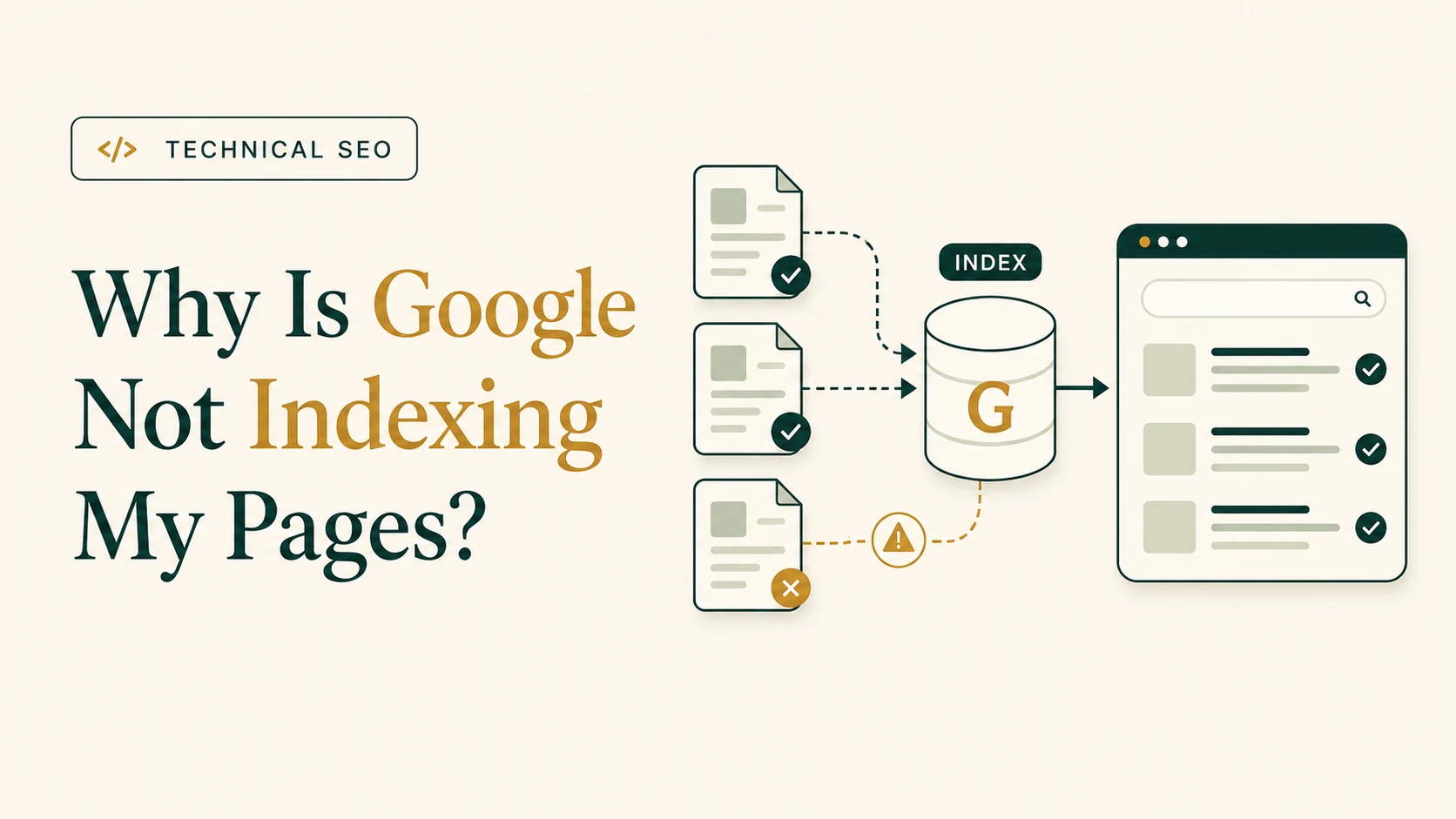
For the broader informational diagnosis, see why Google is not indexing pages.
Indexing recovery should prioritize the URLs that matter to the business: core services, products, collections, categories, locations, high-value guides, and other pages that support visibility or conversion. The goal is not a higher “indexed page count.” The goal is the correct indexable inventory.
Once the root cause is established, fixes can be implemented directly where scope and access allow, or translated into developer-ready requirements. Typical corrections may involve noindex rules, canonicals, sitemap output, internal links, redirects, template settings, broken URL paths, or other crawl/index controls.
If the diagnosis requires broader hands-on remediation, see technical SEO fixes for indexing problems.
Validation may use a fresh crawl, live URL testing, rendered HTML, sitemap checks, URL Inspection, recrawl evidence, and ongoing Search Console monitoring. No service can guarantee or force Google to index a page; the objective is to make the technical setup correct, consistent, and supportable.
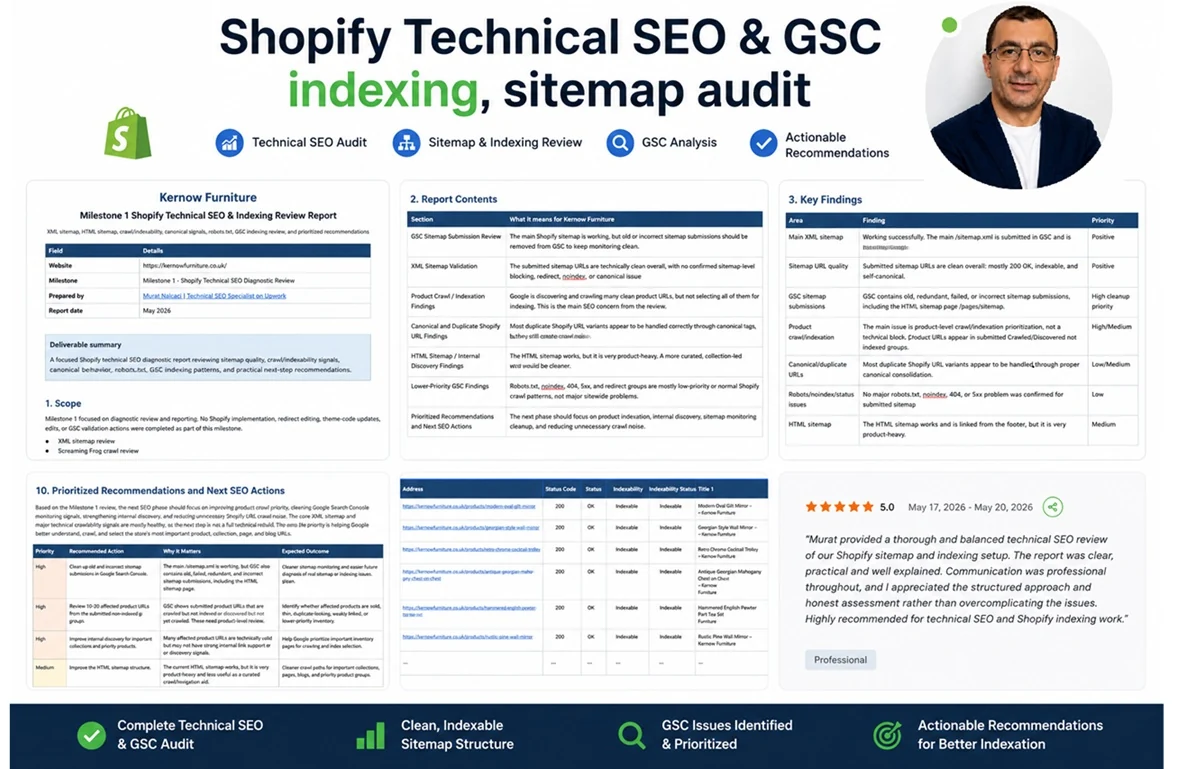
See the Shopify GSC indexing and sitemap audit case study for an example of platform-specific indexing diagnosis.
Possible causes include weak discovery, crawl blocks, noindex directives, incorrect canonicals, redirects, soft 404 behavior, duplicate URL sets, rendering issues, or pages that do not have a clear independent search purpose. The correct diagnosis depends on the exact URL and template evidence.
No. Many excluded URLs are expected. Redirects, duplicates, filtered URLs, search results, and other non-indexable patterns may be functioning correctly. The service focuses on exclusions that affect URLs you actually want indexed.
That status needs diagnosis first. Google has already crawled the URL, so the next checks usually involve indexability, canonicalization, duplication, content distinctness, internal links, and page value. Exact status-specific education belongs in the dedicated blog guide.
No. Google controls its index. I can identify and correct technical barriers, improve signal consistency, and validate the setup, but indexing cannot be guaranteed.
The technical condition is re-tested after implementation using appropriate tools such as URL Inspection, live URL testing, fresh crawls, rendered HTML, sitemap review, and Search Console monitoring.