Core Web Vitals WordPress Case Study
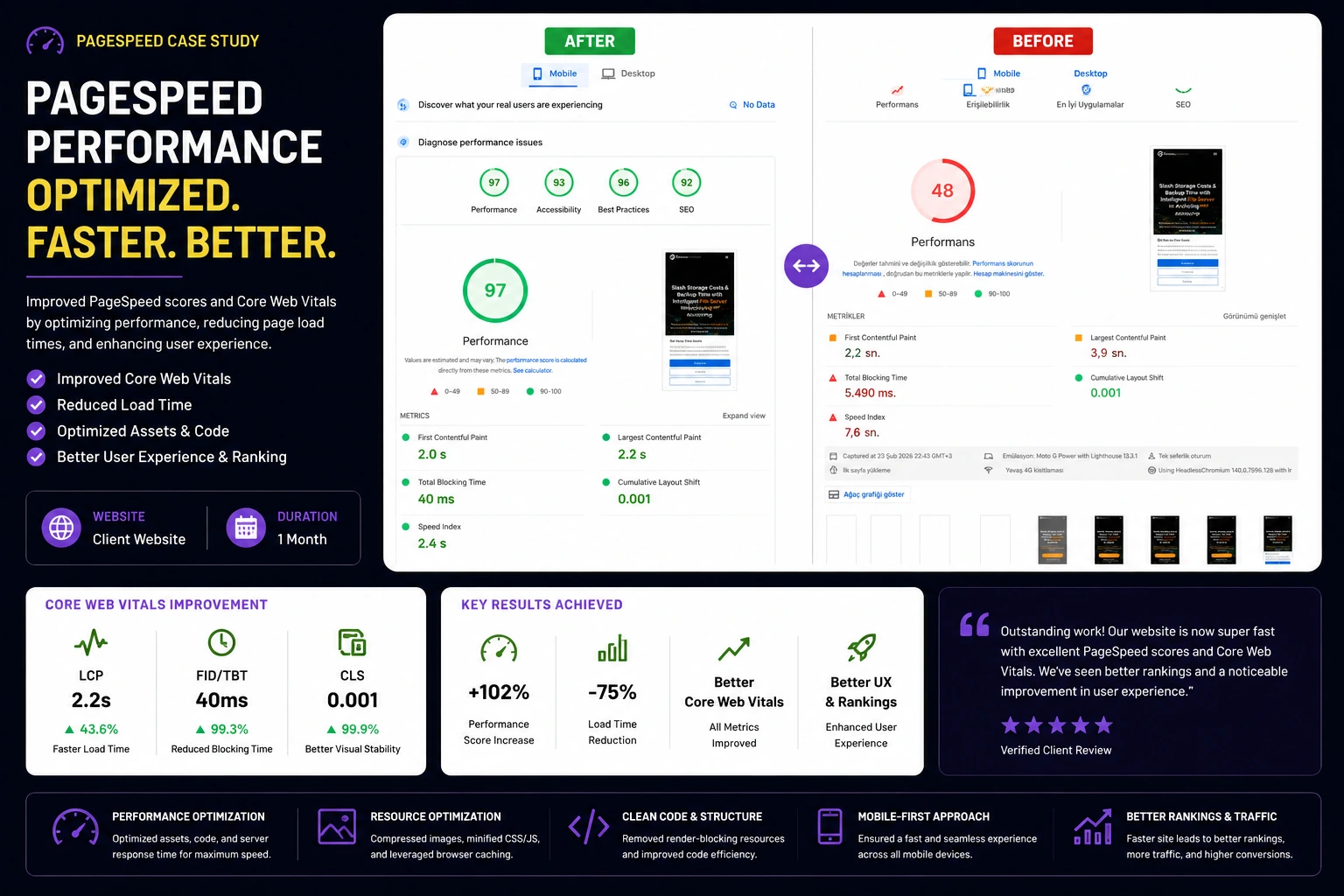
A WordPress and Elementor mobile-performance project improving the documented PageSpeed score from 48 to 97.
View the performance case study →I can separate field data from lab tests, identify the actual bottleneck by template and metric, and create or implement a prioritized performance remediation plan.
Get Technical SEO Help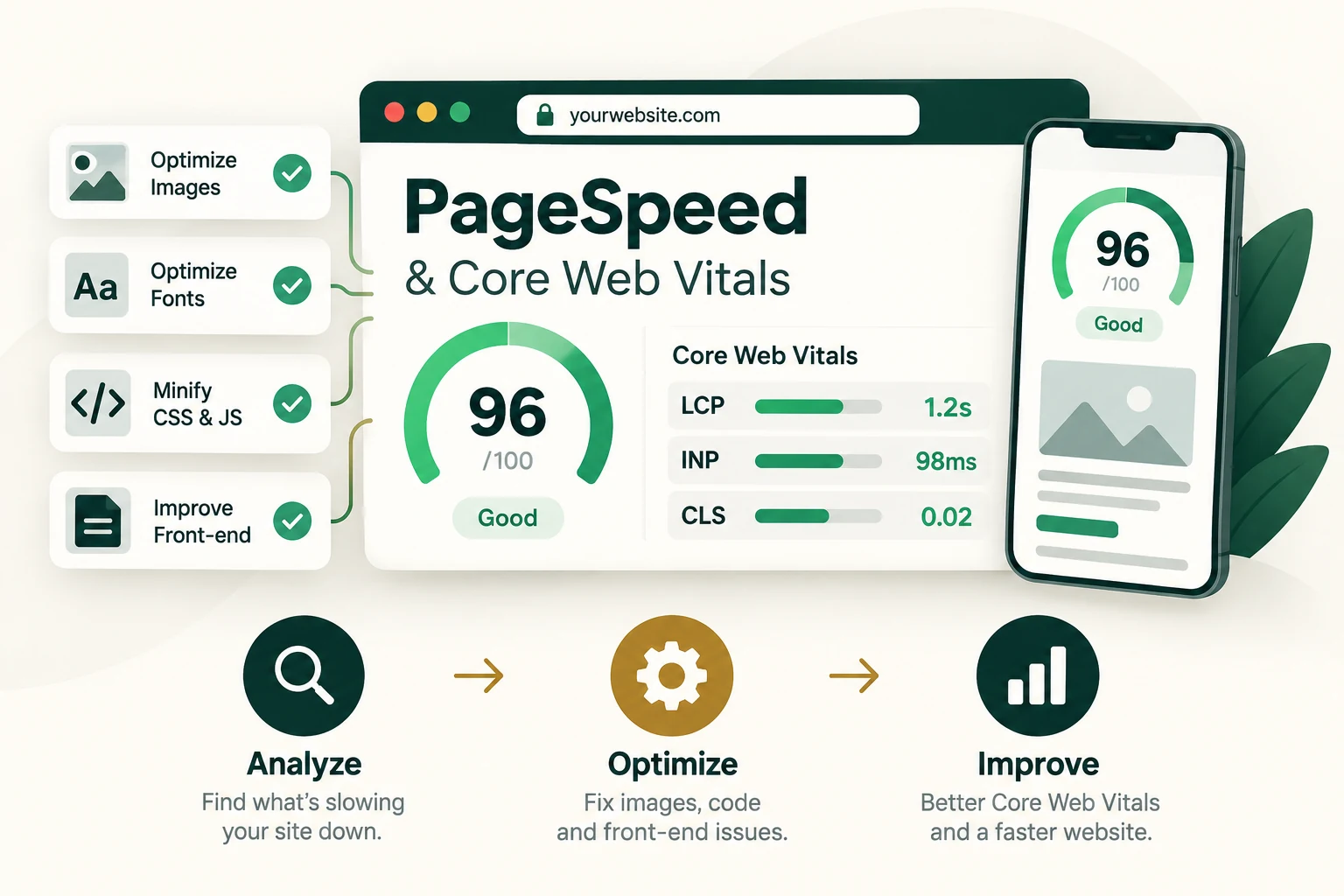
Core Web Vitals optimization is not a race to a perfect PageSpeed score. I diagnose the real template, image, JavaScript, CSS, font, third-party, and server causes behind poor LCP, INP, and CLS, then prioritize fixes that improve real user performance without unnecessarily breaking design or functionality.
A useful performance diagnosis distinguishes real-user field data from controlled lab tests. Core Web Vitals are evaluated using real-world user experience, while Lighthouse and PageSpeed lab data are valuable for reproducing and diagnosing causes.
A page may look acceptable in one lab run and still have poor field data for real users, devices, networks, or page groups. Conversely, a lab warning may identify an opportunity without proving that users are consistently failing the Core Web Vitals thresholds.
The service therefore compares Search Console, Chrome UX Report/CrUX data where available, PageSpeed Insights, Lighthouse, browser tools, and template behavior instead of optimizing toward one isolated score.
Largest Contentful Paint measures how quickly the main visible content element is rendered. Common LCP bottlenecks include:
The correct fix depends on which element is the LCP candidate and which technical layer delays it.
Interaction to Next Paint measures responsiveness to user interactions. Poor INP is often associated with main-thread work and JavaScript execution rather than image size alone.
The goal is to identify which interaction is slow and reduce the work that blocks the browser from responding.
Cumulative Layout Shift measures unexpected visual movement. Common causes include:
CLS improvements should preserve the intended design while reserving space and controlling when dynamic elements appear.
Most performance problems are multi-layered. The remediation plan should identify the responsible layer so the work is assigned correctly.
TTFB, caching, CDN behavior, backend response, and infrastructure limitations.
Responsive images, compression, formats, dimensions, preload decisions, lazy loading, and video behavior.
Render-blocking styles, unused CSS, font loading, unnecessary weights, and layout effects.
Bundle size, long tasks, hydration, delayed rendering, unused code, and framework behavior.
Analytics, chat, reviews, ads, consent tools, tag managers, and other external code that can delay loading or interaction.
A WordPress page builder, Shopify theme, custom React application, and static website do not share the same performance bottlenecks or implementation options. The service diagnoses performance by platform and template so recommendations are realistic for the system. For a focused next step, review WordPress Technical SEO.
Where hands-on changes are in scope, implementation can focus on safe optimizations. Where development is required, the deliverable can define the bottleneck, expected result, technical requirement, and validation method.
For broader implementation support beyond performance, see Technical SEO implementation.
Performance work should be measured before and after. Lab tests can show whether a code or asset change improved the test environment, while field data requires time to reflect real-user experience. Core Web Vitals field reporting is based on aggregated user data rather than an instant single-run score.
Validation may include PageSpeed Insights, Lighthouse, CrUX/field data, Search Console Core Web Vitals groups, browser performance traces, representative templates, and real-user monitoring where available.
See the PageSpeed and Core Web Vitals optimization case study for practical proof.
PageSpeed lab results and real-user field data measure different environments. A good lab run does not guarantee that real users consistently experience good LCP, INP, and CLS.
Yes. Each metric reflects a different experience dimension and often has different root causes. The remediation plan should be metric-specific.
No. A guaranteed score is not a defensible performance objective. The service focuses on diagnosing and improving real bottlenecks while preserving required functionality and design.
Yes. That root-cause separation is central to the diagnosis. Performance problems are assigned to the technical layer that actually creates the bottleneck.
Lab changes can be tested immediately after deployment. Real-user field data updates over time, so final Core Web Vitals evaluation requires monitoring after the release.