A Practical Technical SEO Audit Checklist
Follow a practical technical SEO audit checklist covering crawling, indexing, architecture, performance, prioritization, tools and post-fix validation.
Read the audit framework →I can audit crawlability, indexability, rendering, canonicals, redirects, sitemaps, internal links, site architecture, performance and structured data, then turn the evidence into a prioritized roadmap.
Discuss Your Technical SEO Audit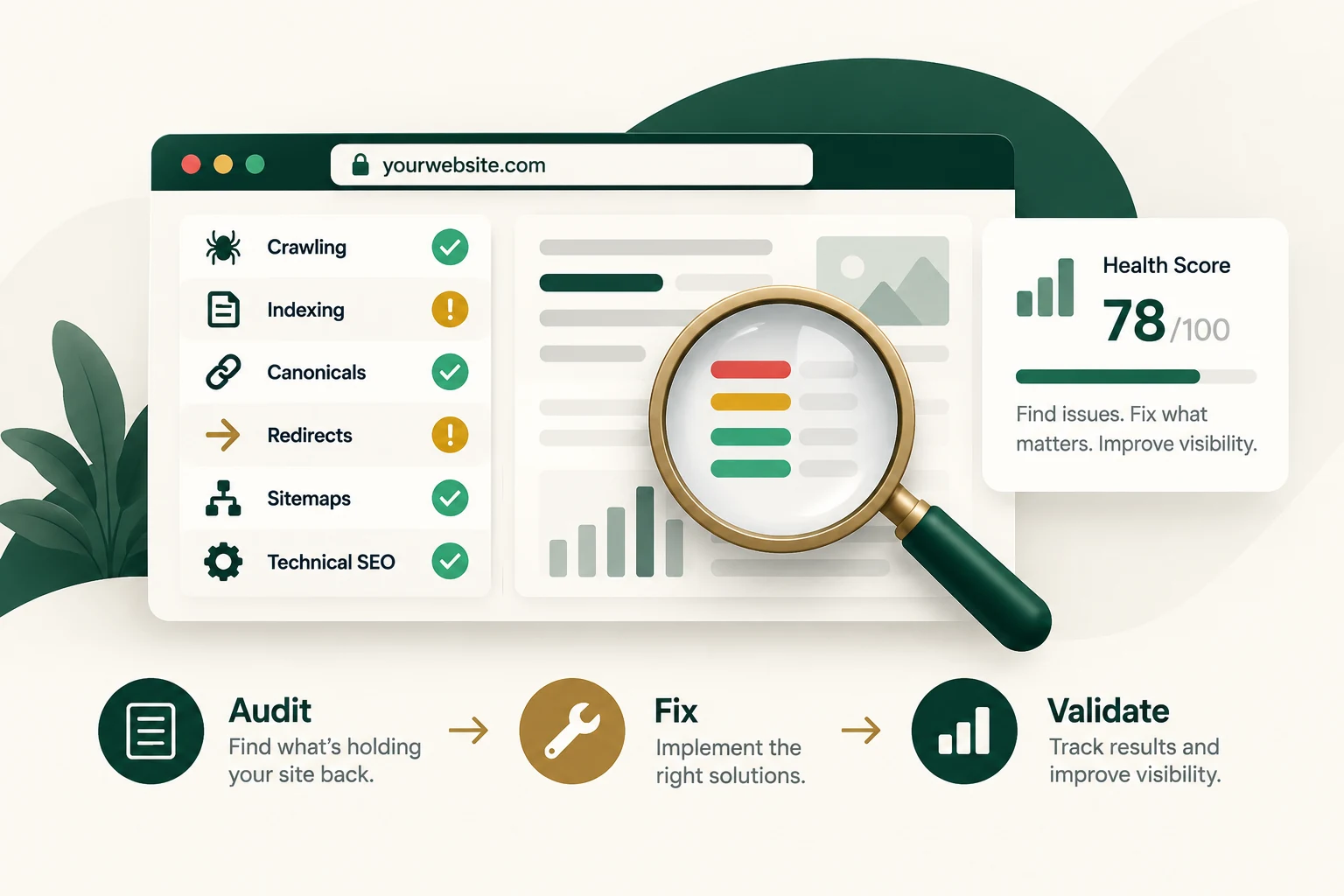
A professional Technical SEO audit should tell you what is actually wrong, which URLs and templates are affected, what should be fixed first, and what your developer needs to change. My audit process is evidence-led, prioritized, and built for implementation—not a raw crawler export.
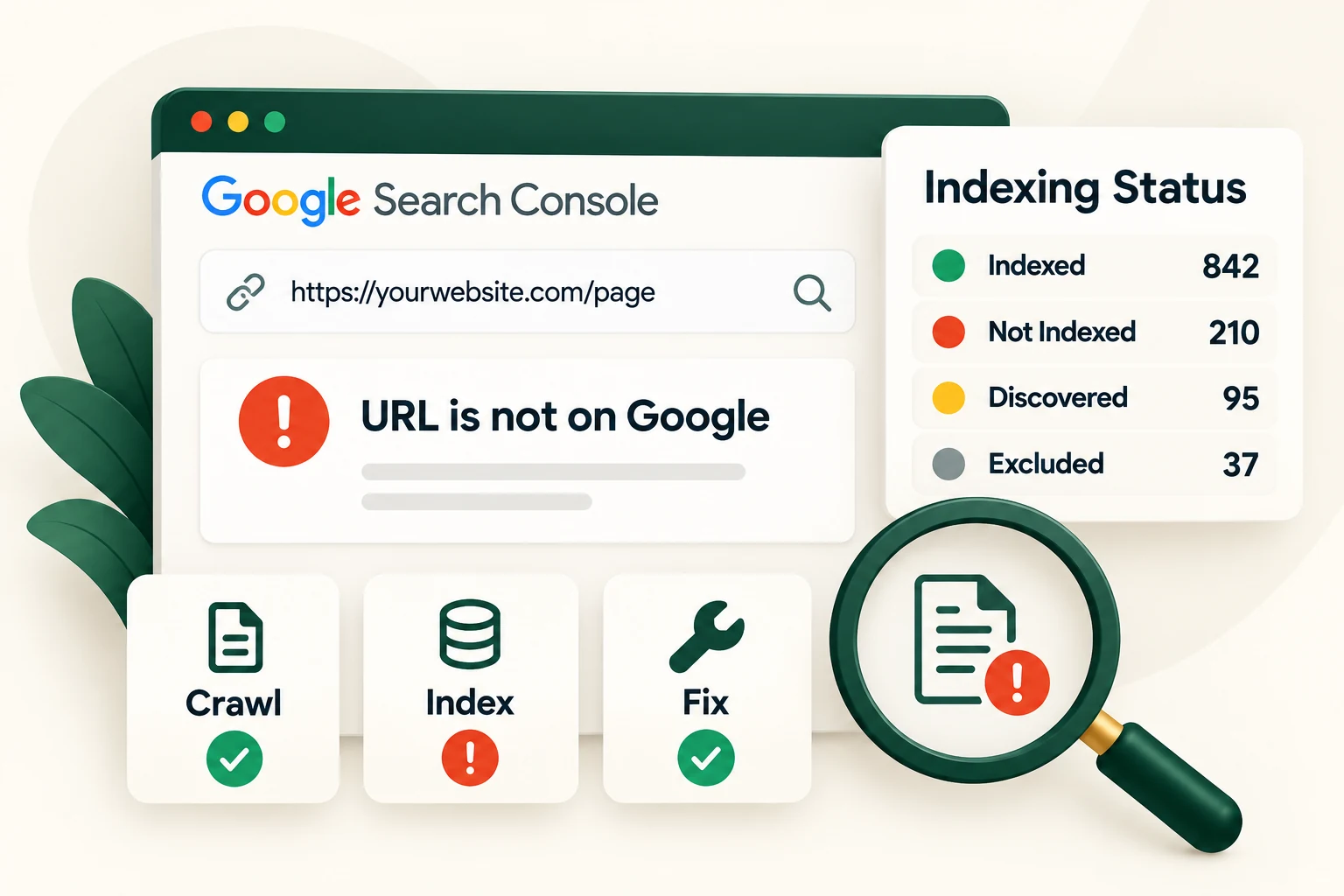
A Technical SEO audit is most useful when the website has a meaningful organic-search problem, a complex technical footprint, or an upcoming change that creates risk. It is also useful when you already have a long list of crawler warnings but do not know which findings deserve development time. For a focused next step, review Google Search Console indexing and recovery.
The scope is adapted to the website, platform, templates, and business-critical URLs. The objective is to identify conditions that can materially affect crawling, indexing, canonical consolidation, rendering, site architecture, page experience, or search-engine understanding.
Robots.txt, meta robots, X-Robots-Tag, status codes, redirects, crawl traps, blocked resources, and other conditions that affect how search engines reach important URLs.
Noindex directives, canonical tags, duplicate URL sets, Google-selected versus user-declared canonicals, soft 404 behavior, and conflicting URL signals.
Whether sitemaps represent the preferred indexable inventory, whether important pages are internally linked, and whether low-value URL patterns consume attention.
Crawl depth, orphan pages, hub/child relationships, navigation, breadcrumbs, redirected internal links, and how priority pages are supported.
Source versus rendered HTML, crawlable links, metadata changes after rendering, delayed content, and JavaScript-dependent page elements where relevant.
Field and lab evidence, LCP, INP, CLS, server response, large assets, scripts, fonts, and template-level performance risks.
JSON-LD output, duplicated or conflicting schema, template mapping, visible-content alignment, and validation where structured data is relevant.
Hreflang, multi-domain or subdomain patterns, server logs, migration history, or other technical layers when the website requires them.
A comprehensive Technical SEO audit combines multiple evidence sources because no single crawler or Search Console report explains the entire website. Depending on the scope, I may use website crawls, Google Search Console, URL Inspection, rendered HTML, source HTML, PageSpeed Insights, structured-data testing, analytics, sitemap files, HTTP headers, and server-log evidence where available.
The audit focuses on patterns, not isolated warnings. If 800 URLs share one template-level canonical problem, the deliverable should describe the underlying template behavior and the affected URL set—not create 800 repetitive recommendations.
Technical findings are prioritized according to business value, scale, severity, implementation risk, and effort. A critical issue affecting revenue-generating or lead-generating templates should usually come before a minor warning on a low-value archive.
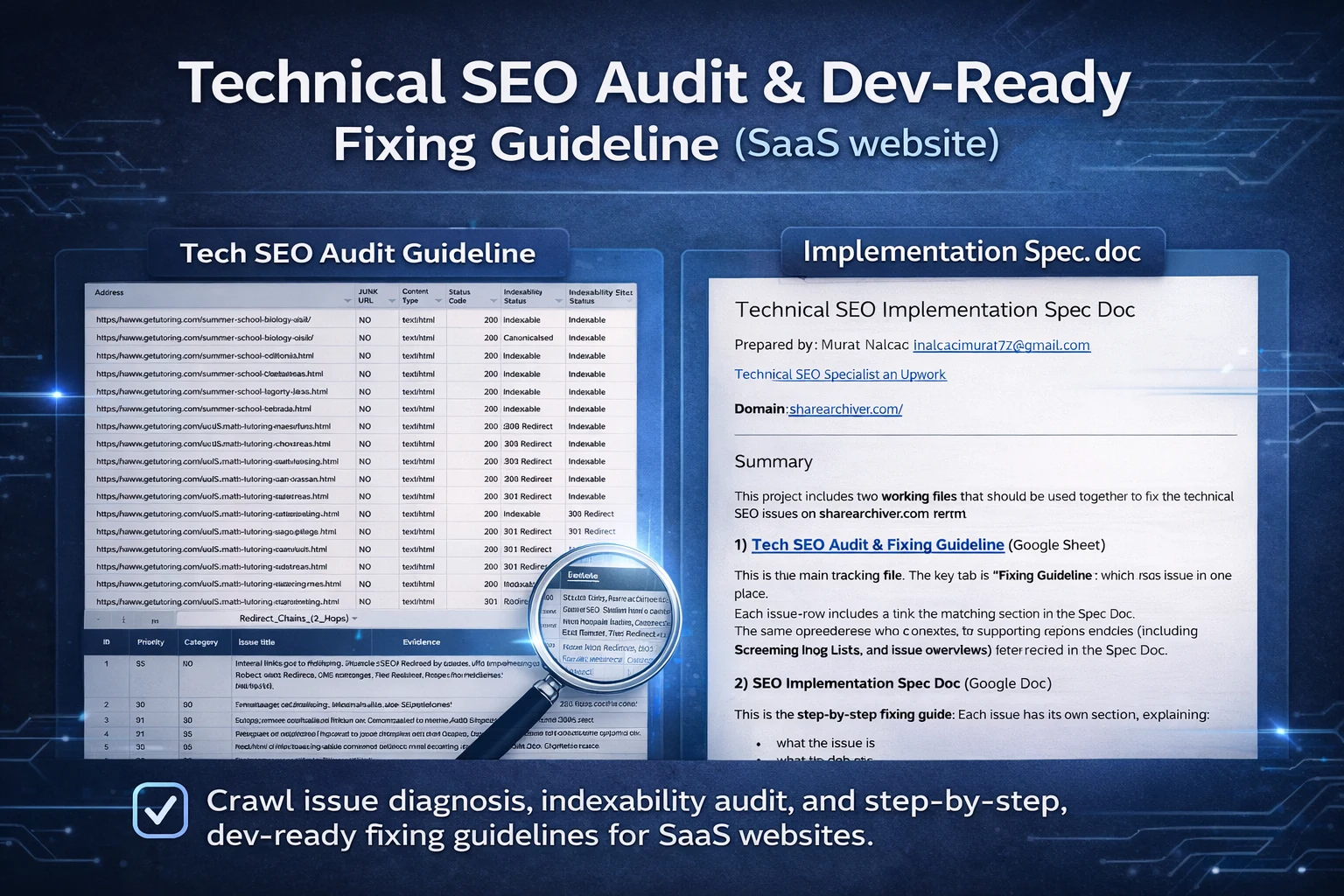
The deliverable is designed to move from diagnosis to execution. Instead of vague instructions such as “fix canonical issues,” each major finding should identify the evidence, the affected URL or template pattern, the expected behavior, the implementation requirement, and the acceptance criteria.
See an example of this approach in the Technical SEO audit and developer-ready roadmap case study.
An audit is appropriate when your internal developer or agency can implement the work. If you need hands-on help, implementation can be scoped separately after the root cause is established. This separation keeps the audit diagnosis-led and makes responsibility clear.
If you already know what needs to change and want execution support, see Technical SEO implementation and fixes.
Technical SEO work should not stop when a ticket is marked complete. After implementation, representative and affected URLs should be re-crawled or re-tested to confirm the intended behavior. Validation may include status codes, redirects, robots directives, canonical tags, sitemap output, rendered HTML, structured data, Core Web Vitals, and Search Console evidence.
A successful deployment proves that code changed. Post-fix validation proves that the SEO condition changed.
Use the technical SEO audit checklist for the informational audit framework.
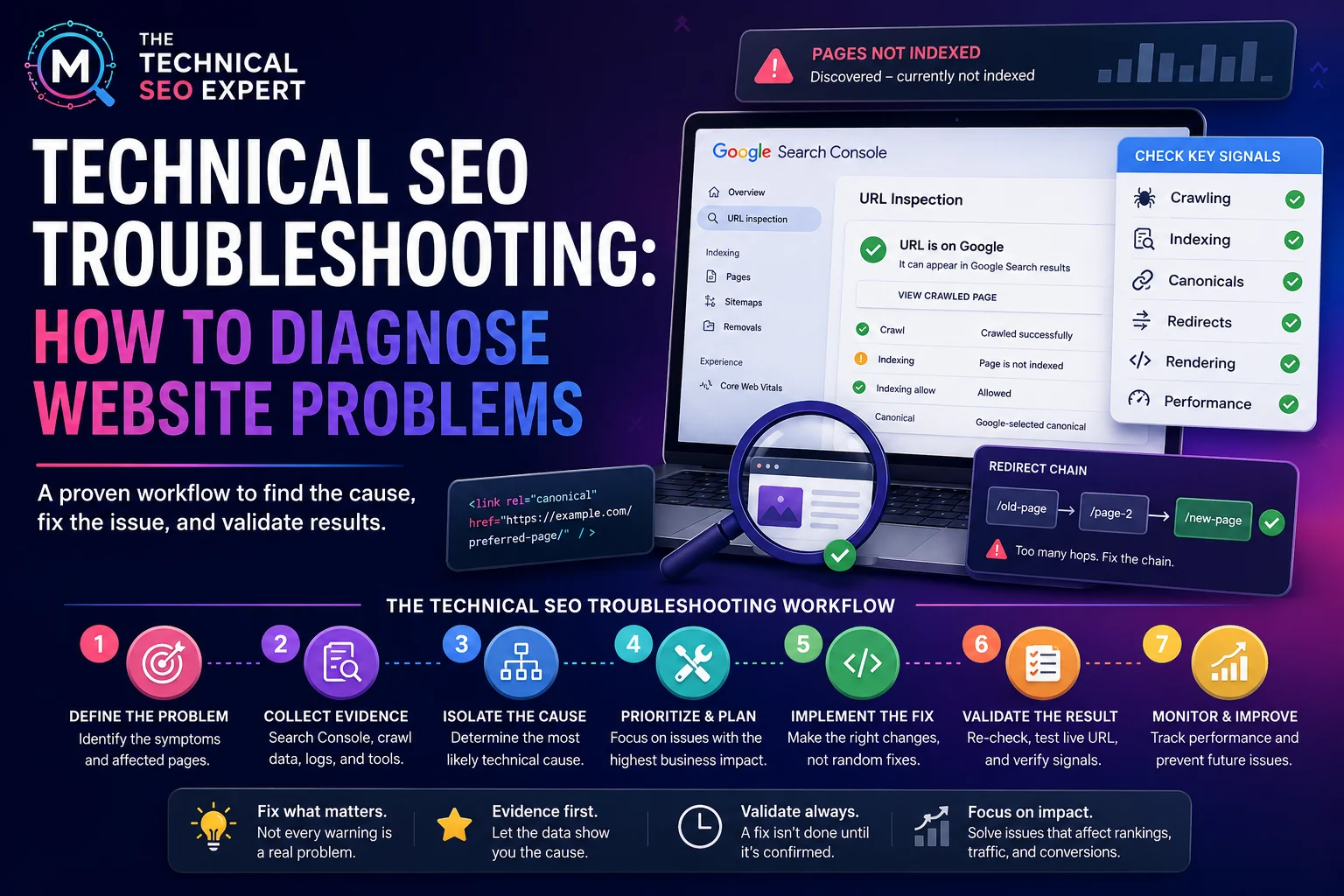
For a broader troubleshooting workflow, see how to find and fix Technical SEO issues.
It should review the technical conditions most relevant to your website, such as crawlability, indexability, canonicals, redirects, sitemaps, internal links, architecture, rendering, performance, and structured data. More importantly, it should explain which findings matter, how they affect the site, and what should change.
Yes. Material findings should be tied to URL or template evidence, then prioritized by business value, scale, severity, risk, and implementation effort.
Automated crawlers are useful evidence sources, but the service is not a raw crawler export. The value is in diagnosis, pattern recognition, prioritization, remediation requirements, and validation.
Yes. Findings can be translated into developer-ready requirements and acceptance criteria, and implementation can be validated after deployment.
No. A Technical SEO audit can identify and reduce technical barriers or conflicting signals, but rankings also depend on relevance, content quality, authority, competition, search demand, and other factors.