How to Find and Choose a Technical SEO Expert
Evaluate diagnostic process, implementation understanding, communication, case studies, and validation.
Read the article →You should hire a Technical SEO specialist when a website problem, migration, platform change, indexing issue, or implementation risk can affect important pages and cannot be safely diagnosed or fixed with routine internal checks.
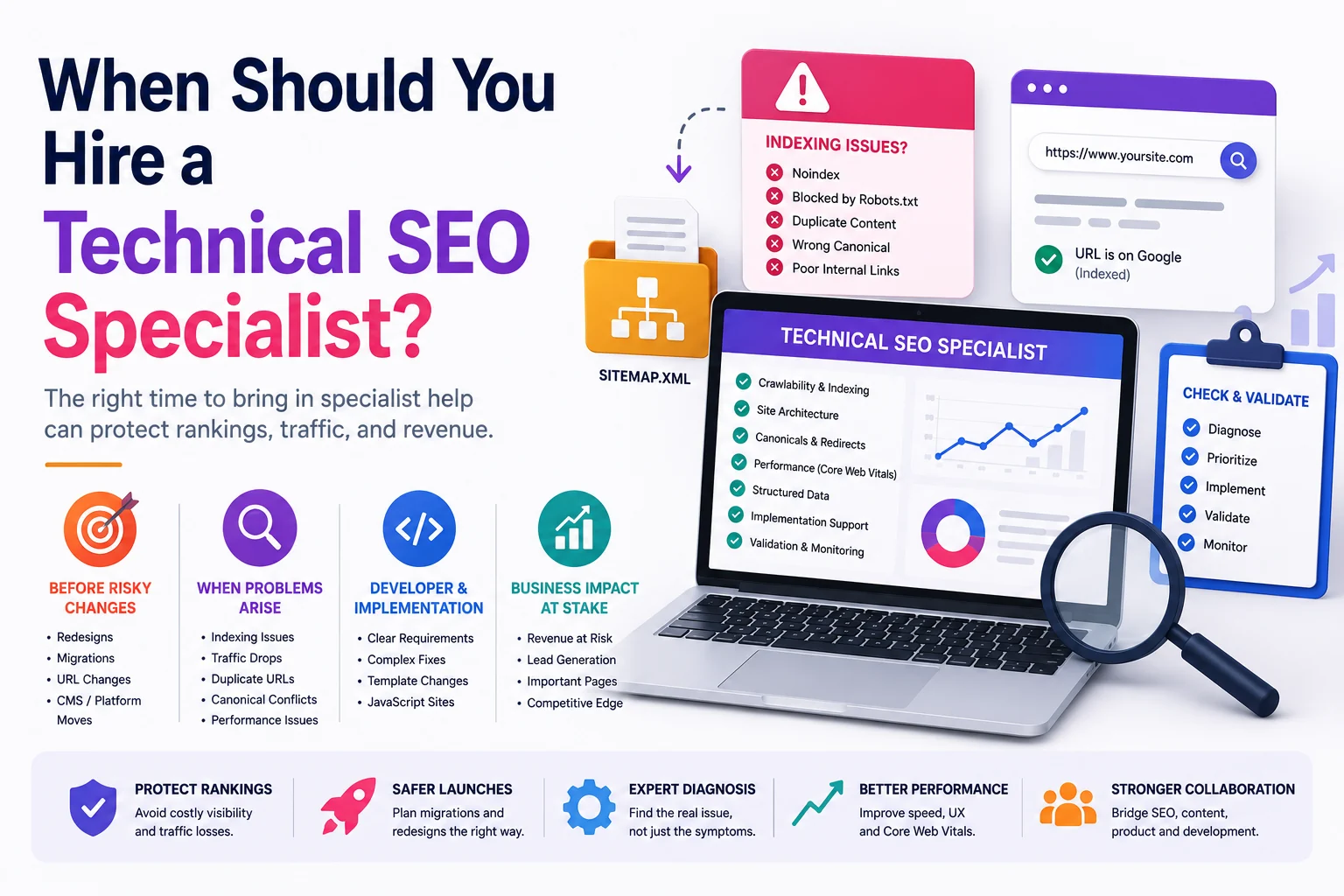
Not every website needs a Technical SEO specialist every month. A small, stable website with no indexing, migration, or performance issue may only need a periodic review.
But when important pages are missing from Google, a redesign is coming, or developers need clear SEO requirements, guessing becomes more expensive than diagnosis.
For the broader role definition, see what a Technical SEO expert is. This article focuses on the hiring decision.
Hiring a Technical SEO specialist makes sense when the risk, complexity, or business value of the issue is high enough that a generic checklist is not enough.
Common situations include:
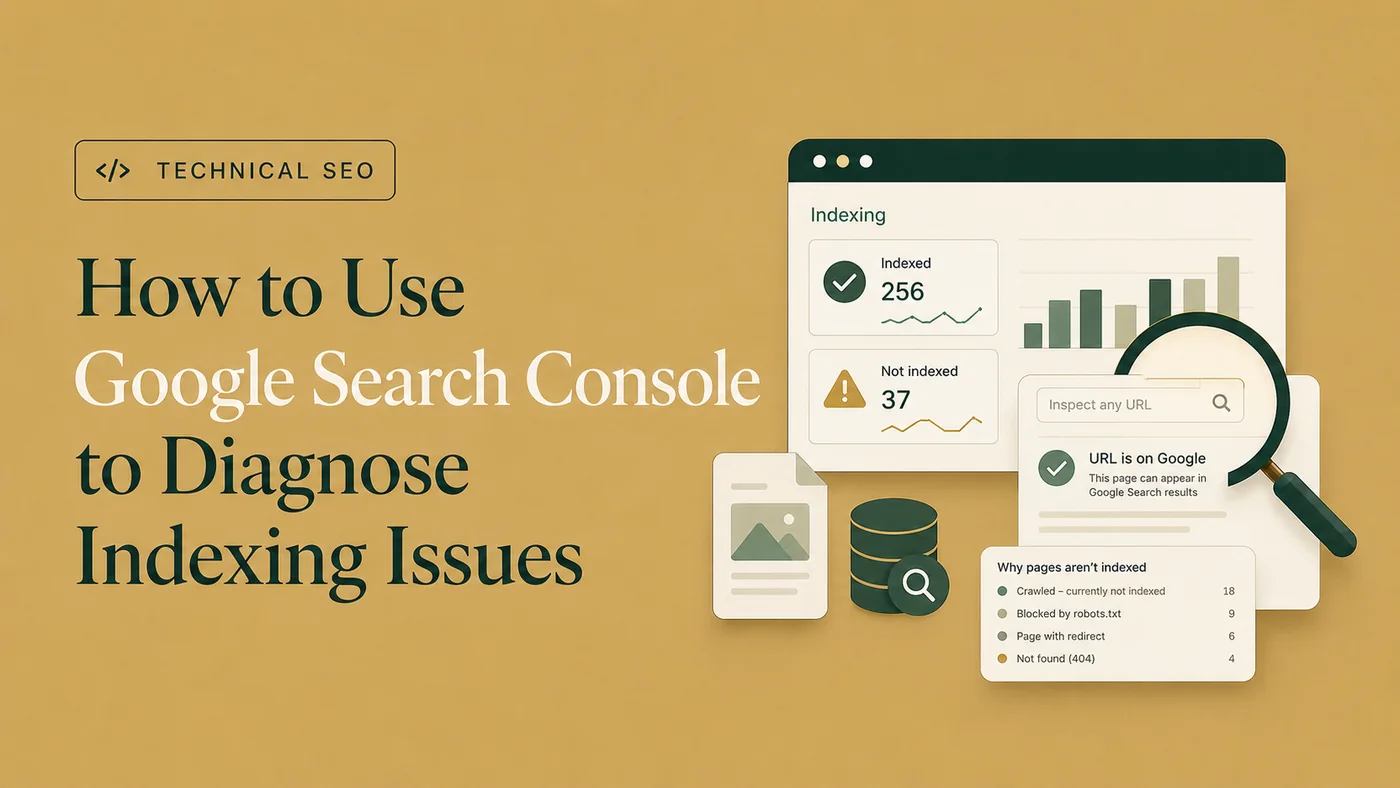
The stronger the business value of the affected pages, the stronger the hiring case. If indexing is the symptom, first review the common reasons why Google may not index a page and then use Search Console evidence to diagnose indexing issues.
Sometimes, yes.
Internal teams can often handle:
A simple review may be enough when the site is small, the issue affects few URLs, and the fix is reversible.
Specialist help becomes more valuable when:
A crawler can tell you that 2,000 URLs are excluded. It cannot decide which exclusions are intentional, which are harmful, and which one should be fixed first.
Yes, if organic visibility matters.
A Technical SEO specialist should ideally be involved before:
Migration-related SEO work may include URL inventories, redirect mapping, staging checks, canonical review, internal-link updates, sitemap changes, analytics testing, and post-launch monitoring.
Use the website migration SEO checklist when the project involves URL changes, redesigns, or platform moves.
Hiring after a broken migration is still possible, but it is usually more expensive, slower, and more stressful. Search engines are patient in many ways, but they are not responsible for rescuing a launch plan that forgot the old URLs existed.
A one-time Technical SEO audit may be enough when:
A good audit should include:
A weak audit gives you a large spreadsheet and a small headache. A useful audit tells you what matters, why it matters, and what should happen next.
Technical SEO audit and implementation support can define the scope, evidence, priorities, developer requirements, and validation process before the issue becomes more expensive.
Ongoing Technical SEO support is more useful when the website:
Ongoing support can include monthly or quarterly crawls, release QA, migration support, indexing analysis, performance monitoring, and developer consultation.
In-house specialist: Best when the company has ongoing technical changes, a large site, and enough SEO work to justify a dedicated role.
If cost and scope are still unclear, review how much a Technical SEO expert costs before requesting quotes.
Freelance consultant: Best for focused audits, migrations, indexing investigations, CMS-specific fixes, and implementation support.
Agency: Best when the company needs broader SEO coverage, content, analytics, local SEO, development support, and multiple specialists.
Do not choose based only on the size of the provider. Choose based on diagnostic ability, implementation understanding, communication, and validation.
Use this decision framework:
| Situation | Likely need |
|---|---|
| Small site, no major issue | Periodic review |
| One defined technical problem | One-time audit or consultation |
| Important pages not indexed | Specialist diagnosis |
| Redesign or migration planned | Pre-launch Technical SEO support |
| Large duplicate URL inventory | Specialist audit and prioritization |
| Frequent releases or platform complexity | Ongoing support |
| Developers need SEO requirements | Audit and developer roadmap |
If the issue can affect valuable pages, templates, revenue, leads, or a launch, bring in specialist support early.
Yes, if important pages are missing from Google and the cause is unclear. Indexing problems can involve crawl access, noindex directives, canonicals, duplication, rendering, internal links, or content value.
Yes, when organic search matters. Migration planning should include URL mapping, redirects, crawl controls, canonicals, internal links, sitemap changes, analytics, and post-launch validation.
It can be enough if the problem is defined and your team can implement the fixes. If implementation is difficult, choose audit plus developer roadmap or hands-on support.
You should consider hiring a Technical SEO specialist when important pages are not indexed, the cause of a technical issue is unclear, or a migration, redesign, platform change, or recurring release cycle could affect organic visibility.
You do not need a Technical SEO specialist for every small website change.
You should consider hiring one when the problem affects important pages, the cause is unclear, the implementation has risk, or a migration, redesign, platform change, or recurring release cycle could affect search visibility.
The best time to hire is before the technical risk becomes a traffic problem. For choosing the right provider, continue with how to find and choose a Technical SEO expert.
When you already know the website needs investigation, Technical SEO audit and implementation support can help define the scope, evidence, priorities, and validation process. You can also share the issue through the contact form if you want the problem reviewed directly.




Clear diagnosis, practical fixes, and excellent communication.
Verified Upwork feedback