When Should You Hire a Technical SEO Specialist?
Know when indexing issues, migrations, traffic drops, or developer needs justify specialist support.
Read the article →A Technical SEO specialist identifies, prioritizes, implements or guides, and validates website changes that affect how search engines crawl, render, index, and understand important pages.
You can also watch the 53-second Technical SEO expert overview before going through the full workflow below.

A Technical SEO specialist does more than run a crawler and export a long list of warnings. That part is easy. Given enough URLs, most tools will eventually find something to be upset about.
The useful work begins after the export: deciding which issues are real, which pages they affect, whether they matter, how they should be fixed, and how to confirm that the fix actually worked.
If you need the broader definition of the role, start with what a Technical SEO expert is. This article focuses on the practical work a specialist performs.
A Technical SEO specialist usually starts by understanding the website’s platform, business model, important pages, recent changes, and known problems.
The first checks often include:
The focus should begin with business-critical pages and templates. A noindex directive on every service page matters more than a minor title warning on an obsolete archive.
No. An audit is often the starting point, but it is not the whole role.
A strong Technical SEO workflow usually includes four stages:
A technical SEO audit checklist helps structure the review, but the specialist still needs to interpret the findings. Not every excluded URL should be indexed. Not every redirect is wrong. Not every duplicate page creates a problem. Not every performance score reflects a high-priority business issue.
Technical SEO diagnosis connects the symptom to the cause.
For example:
After identifying the cause, the specialist prioritizes the issue by:
This prevents teams from spending several days polishing low-value warnings while an important template remains blocked.
A useful Technical SEO review connects evidence, affected URLs, priority, implementation requirements, and validation steps.
Sometimes. It depends on the website platform, access level, scope, and the specialist’s technical ability.
If you are defining these responsibilities for a hiring brief, see the Technical SEO specialist job description.
A Technical SEO specialist may directly fix:
For more complex development work, the specialist should provide clear requirements for developers, including:
A developer may know how to implement a redirect rule. The Technical SEO specialist should know which URLs need redirects, where they should point, and how the result should be tested.
Typical Technical SEO deliverables include:
The deliverable should not simply say, “Fix canonical issues.” It should explain which URLs are affected, what the current signal is, what the preferred signal should be, and how the completed fix will be validated.
Validation is part of Technical SEO work.
Depending on the issue, validation may include:
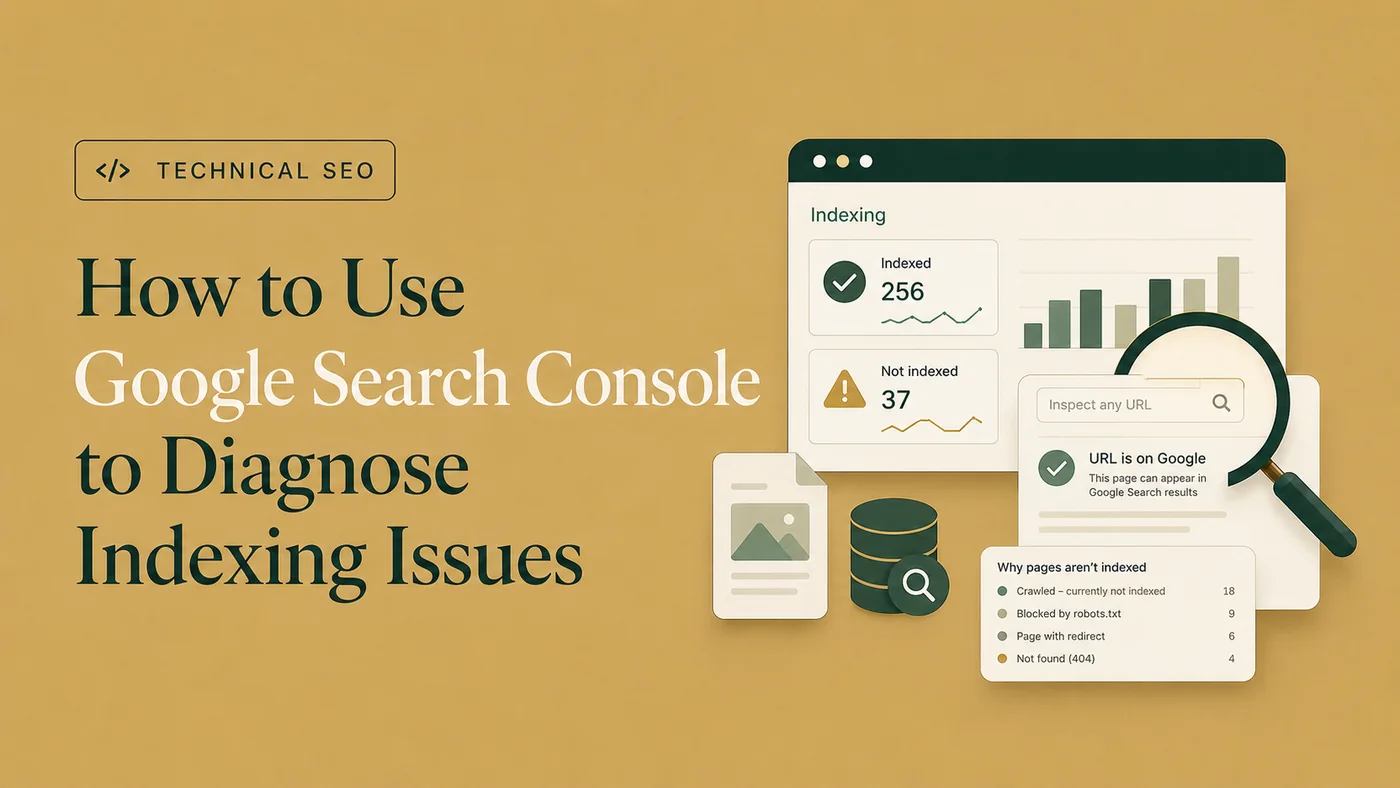
For indexing problems, use a dedicated workflow to diagnose indexing issues in Google Search Console rather than relying only on whether a page appears in a site: search.
A Technical SEO specialist may contribute to content structure, internal linking, and strategy, but they do not usually own every SEO activity.
For people who want to build this skill set themselves, the guide on how to become a Technical SEO expert explains the learning path.
They may not be responsible for:
The role is narrower and deeper: making sure important pages are technically accessible, indexable, understandable, fast enough, and supported by consistent signals.
A Technical SEO specialist audits, diagnoses, prioritizes, implements or guides, and validates website changes affecting crawling, rendering, indexing, architecture, redirects, canonicals, performance, and structured data.
Yes. A good specialist should translate SEO findings into developer-ready requirements, including affected URLs, evidence, expected behavior, implementation notes, and validation steps.
It can be a one-time audit for a small or stable website. Larger, frequently changing, multilingual, ecommerce, JavaScript-heavy, or migration-prone websites often need ongoing monitoring and implementation support.
A Technical SEO specialist connects evidence to action.
The role is not just to find warnings. It is to understand whether important pages can be discovered, crawled, rendered, indexed, and interpreted correctly; identify what prevents that from happening; prioritize the work; guide or implement fixes; and confirm that the intended technical condition changed.
That is what separates useful Technical SEO work from another long spreadsheet that nobody wants to open twice. When the issue affects important pages or risky website changes, the next step is understanding when to hire a Technical SEO specialist.




Clear diagnosis, practical fixes, and excellent communication.
Verified Upwork feedback